
There are sequels that play it safe, and then there are sequels that make you wonder how the original ever felt complete. Hades II is the latter. Supergiant Games' follow-up to its genre-defining 2020 roguelike launched on PC and Nintendo Switch last September to near-universal acclaim, earning a Metacritic average hovering between 94 and 98 depending on platform and walking away with Best Action Game at The Game Awards 2025. Now, seven months later, Melinoë's war against the Titan of Time has arrived on PlayStation 5 and Xbox Series X/S, and after spending the better part of two weeks with the PS5 version, I can say with confidence: this isn't just a port. It's the definitive way to experience one of the greatest action games ever made.
What Supergiant has accomplished here borders on the unreasonable. Hades II is simultaneously deeper, wider, more mechanically ambitious, and more emotionally resonant than its predecessor. It takes the tight loop of run, die, learn, improve that made the first Hades so compulsive and layers on top of it a second full route through the game's world, an expanded cast of gods and mortals, a magick system that fundamentally alters combat pacing, and a narrative that earns every one of its quieter moments. And on console, it runs like a dream.
If you've been waiting for this version, your patience has been rewarded. Let's talk about why.
The trailer above captures the atmosphere perfectly, but no amount of footage can prepare you for how this game feels in your hands. From the very first encounter to the hundredth, Hades II commands your attention with a confidence that few games possess.
A Daughter's War Against Time
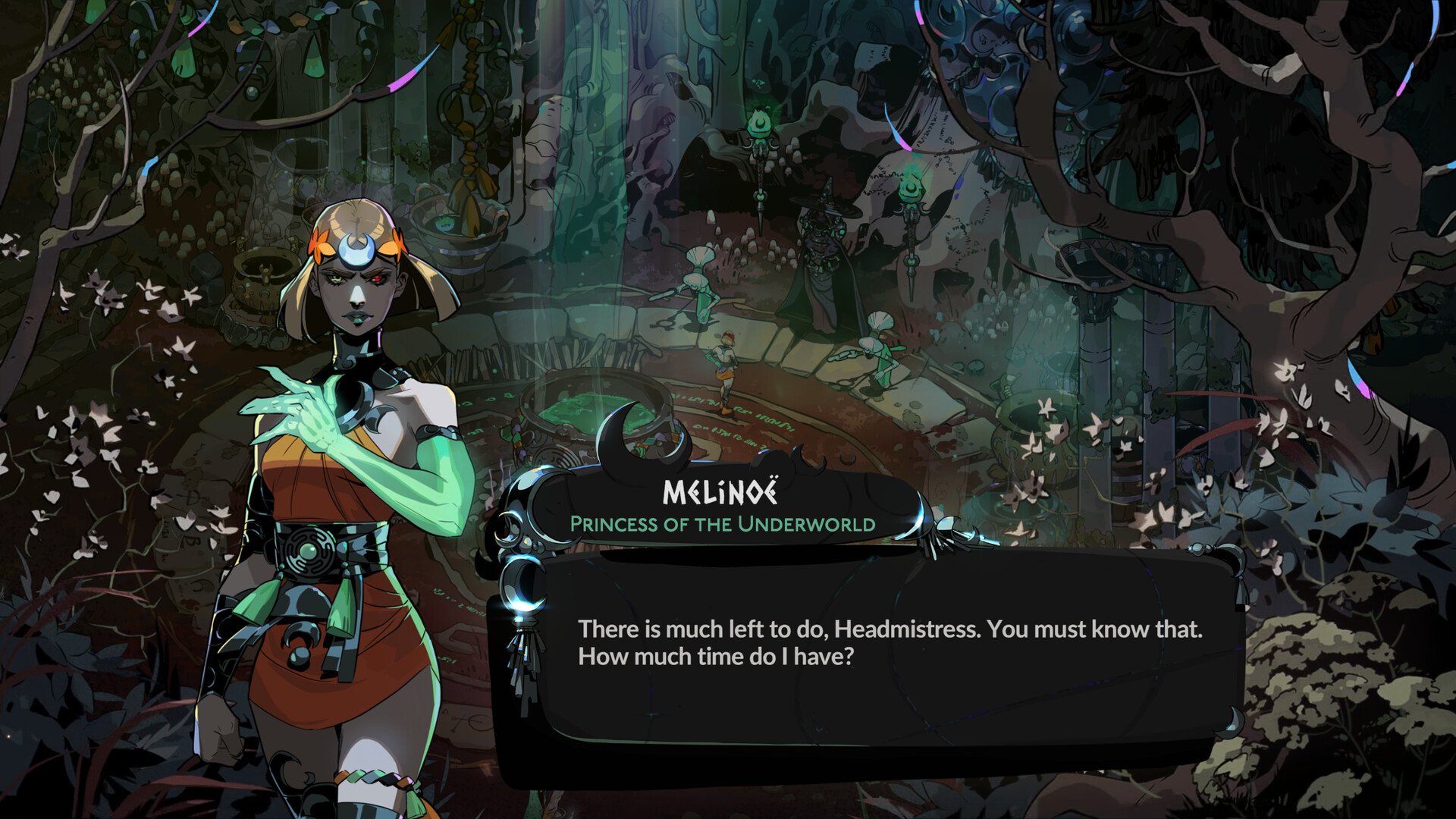
Where the original Hades told the story of Zagreus, the Prince of the Underworld, desperately trying to escape his father's domain to reach his mother on the surface, Hades II flips the script in the most elegant way possible. You play as Melinoë, Zagreus's sister and the Princess of the Underworld, and you're not trying to escape. You're trying to break in.
The Titan Chronos, father of the gods and the embodiment of Time itself, has seized control of the Underworld. Hades is imprisoned. The House of the Dead has fallen. Melinoë, raised in secret by the witch goddess Hecate at a hidden crossroads between worlds, has trained her entire life for one purpose: to infiltrate her family's stolen kingdom and destroy Chronos before his grip on time itself becomes absolute.
It's a premise that immediately establishes higher stakes than the original. Zagreus's rebellion was personal and intimate — a son defying his father. Melinoë's mission is existential. If Chronos wins, the cycle of life and death breaks down entirely. Mortals stop dying. Souls stop passing. The world rots.
What makes the storytelling so effective isn't just the premise, though. It's the execution. Supergiant has always excelled at weaving narrative into the fabric of gameplay, and Hades II represents the studio's most sophisticated effort yet. Every run yields new dialogue. Every death unlocks new story threads. Characters remember your choices, comment on your failures, and evolve in ways that feel organic rather than scripted. The writing is sharp, often genuinely funny, and surprisingly tender when it needs to be.
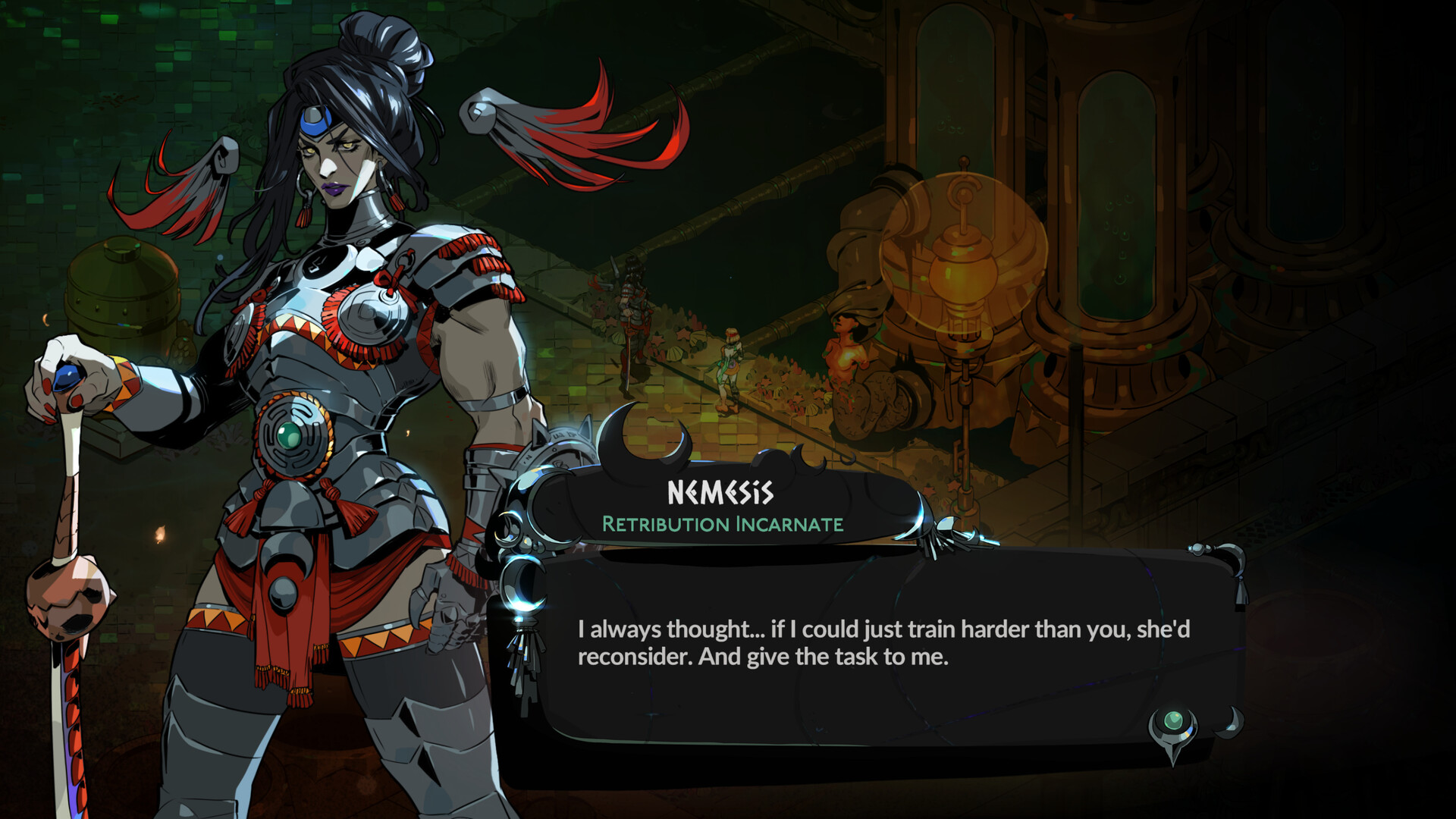
Melinoë herself is a revelation. Where Zagreus was charming, irreverent, and occasionally reckless, Melinoë is focused, determined, and carrying a weight that she never asked for. She's been raised as a weapon, trained from childhood to kill a Titan, and the game doesn't shy away from the psychological toll of that upbringing. Her interactions with Hecate — part mentor, part surrogate mother, part commanding officer — form the emotional spine of the game, and the voice performances bring every exchange to life with remarkable nuance.
The supporting cast is equally strong. Arachne, the cursed weaver who crafts armor for Melinoë between runs, is an instant fan favorite whose gentle kindness contrasts beautifully with the violence of the game's combat. Circe, Medea, and Icarus each bring their own mythological baggage to the Crossroads, and the game takes its time letting you build relationships with each of them. The romance options are handled with the same maturity and warmth that characterized the first game, though the pool of potential partners has expanded considerably.
And then there are the Olympian gods. Zeus, Poseidon, Aphrodite, Demeter, Apollo, Hephaestus, Hestia, and others all return to offer their boons, and the voice cast — including the irreplaceable Logan Cunningham and newcomer Asa Butterfield — delivers performances that bounce between mythic gravitas and laugh-out-loud comedy. The gods are petty, magnificent, contradictory, and endlessly entertaining, exactly as they should be.
Combat That Feels Like Poetry in Motion
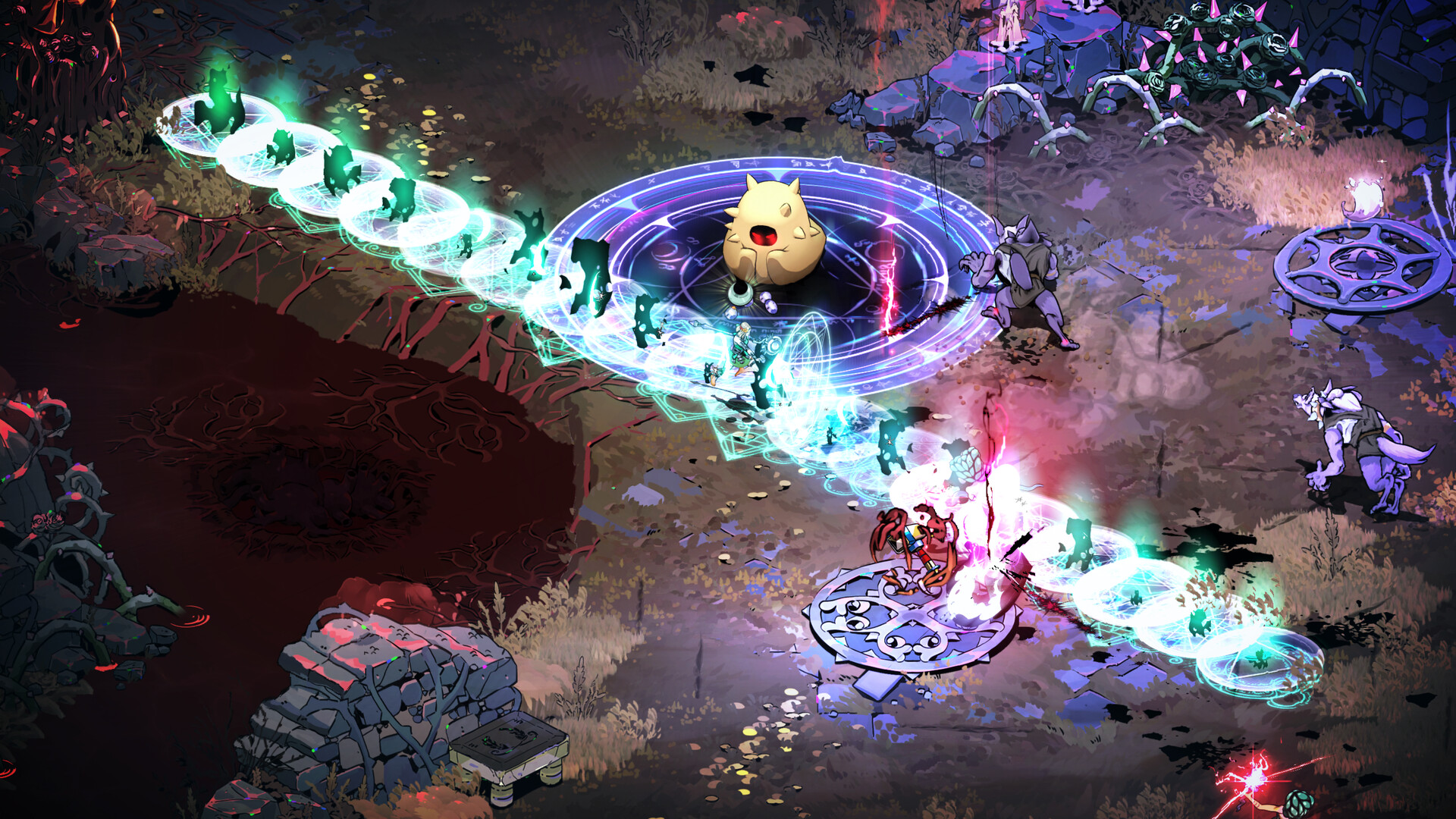
If the story is the heart of Hades II, the combat is its pulse. Supergiant took an already excellent action framework and rebuilt it from the ground up, and the result is one of the most satisfying combat systems in any game, on any platform, full stop.
The basics will be familiar to anyone who played the original: you have a primary attack, a special attack, a dash, and a cast. But the differences become apparent almost immediately. Melinoë's cast doesn't just bounce around the room like Zagreus's — it locks enemies in place, creating a crowd-control tool that fundamentally changes how you approach encounters. It turns the cast from a nice-to-have into a strategic pillar, and the boon synergies that build around it are some of the most creative in the game.
The biggest mechanical addition, though, is the Magick Bar. Melinoë has a mana resource that governs her more powerful abilities, and managing it becomes a second layer of decision-making that runs parallel to positioning and attack timing. Some weapons drain magick quickly but deal devastating damage. Others trickle it slowly, letting you sustain pressure over longer fights. The tension between spending magick aggressively and conserving it for a boss encounter creates a risk-reward dynamic that the original never had.
The weapon variety has expanded dramatically as well. Each weapon fundamentally changes Melinoë's moveset and playstyle, and the differences are far more pronounced than the original's weapon roster. The Sister Blades offer quick, aggressive combos. The Moonstone Axe rewards patience and timing with enormous damage windows. The Argent Skull turns you into a mid-range spell caster. The Umbral Flames create area-denial zones that transform corridor fights into tactical puzzles. Every weapon feels complete, every weapon enables different boon builds, and every weapon will eventually become someone's absolute favorite.
On the DualSense controller, the combat reaches another level entirely. The haptic feedback isn't just cosmetic — Supergiant has mapped distinct haptic profiles to each weapon type, each element, and each god's blessing. You can feel the difference between a Zeus boon's crackling lightning and Demeter's biting frost in the palm of your hand. Dashes have a satisfying snap. Heavy attacks build resistance in the adaptive triggers before releasing. It's exactly the kind of implementation that justifies the DualSense's existence: subtle, meaningful, and impossible to go back from once you've experienced it.
Enemy design deserves its own paragraph. The bestiary in Hades II is enormous, drawing from the deepest wells of Greek mythology, and nearly every enemy type demands a different tactical response. You'll fight shades, lost souls, mythological beasts, corrupted heroes, and eldritch horrors that look like they wandered in from a different game entirely. The mini-bosses that guard region transitions are particularly impressive, offering multi-phase encounters that test everything you've learned. And the full bosses — the Titan's champions, the guardians of each realm — are some of the best boss fights in the roguelike genre, period.
Two Paths, Infinite Possibilities
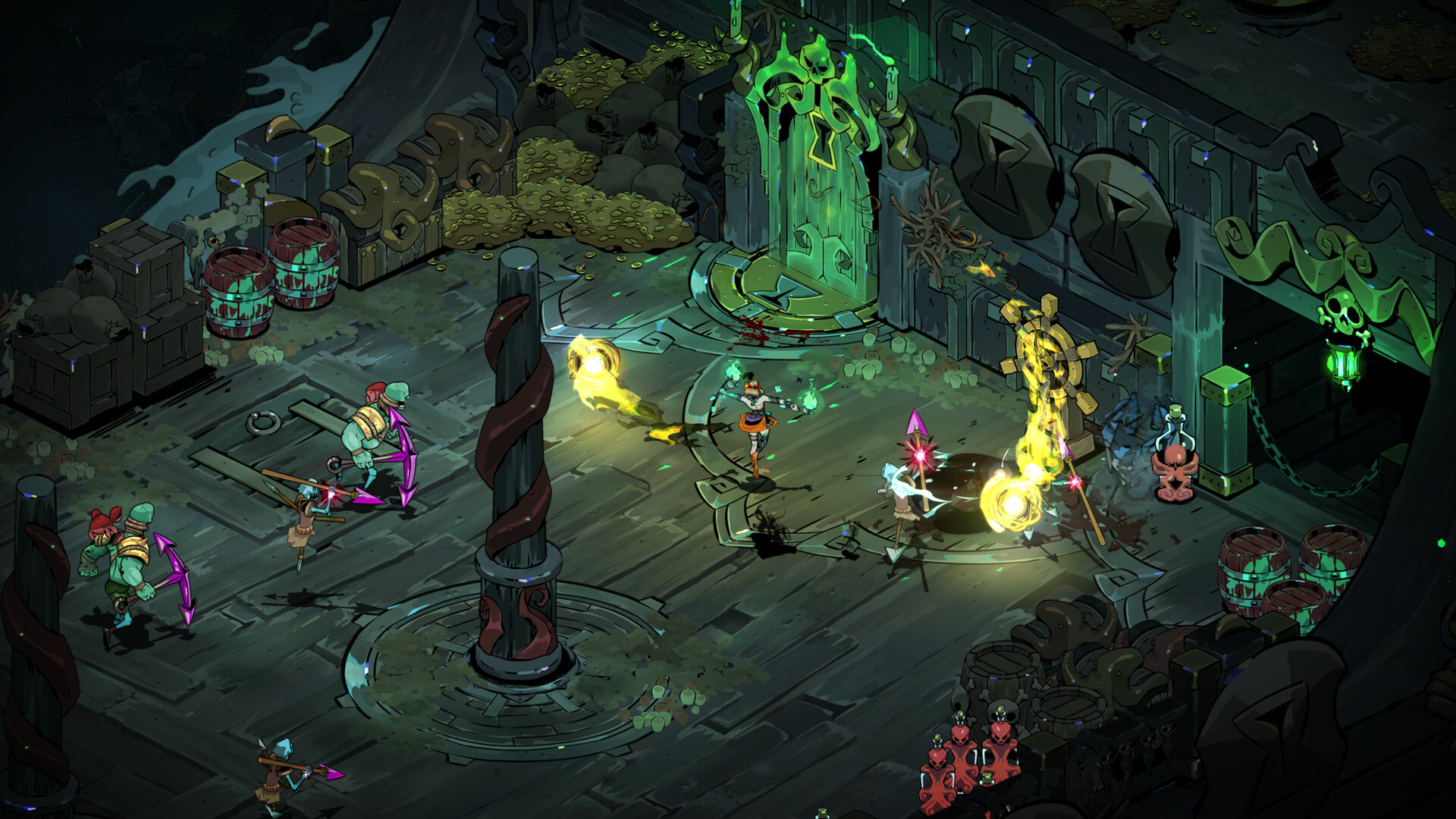
Perhaps the most ambitious structural decision in Hades II is the inclusion of two entirely separate routes through the game. The first follows the original's template: you descend through the Underworld, pushing through Erebus, the dark waters of Oceanus, the haunted Fields of Mourning, and finally into the depths of Tartarus where Chronos waits. Each region has its own visual identity, enemy roster, environmental hazards, and boss encounters, and each one builds on the last in terms of difficulty and mechanical complexity.
But Hades II also lets you go up. The surface route takes Melinoë through the mortal world: Ephyra, the Rift of Thessaly, Mount Olympus, and finally the Summit itself. These aren't reskins of the underground zones. They're entirely new biomes with their own enemy types, their own boon interactions, their own narrative threads, and their own bosses. The surface route is as long and as fully realized as the underworld path, effectively doubling the game's content.
What makes this work isn't just the quantity of content — it's how the two routes interlock. Certain story revelations only come from alternating between paths. Some NPC relationships advance through underworld runs, others through surface runs. Mechanical upgrades earned on one route benefit the other. The game actively encourages you to switch between them, and the pacing is masterful: just when one path starts to feel familiar, the other offers a completely fresh set of challenges.
Boon diversity has exploded alongside the expanded world. The Olympian gods offer different blessing sets depending on which route you're running, and the interactions between boons — the duo boons, the legendary boons, the synergy chains — are more intricate than ever. Building a run in Hades II feels like assembling a watch: every piece matters, every combination creates something new, and the best builds achieve a mechanical elegance that makes you feel like an absolute genius.
Selene's Hexes add yet another layer. These moon-goddess blessings function as ultimate abilities on long cooldowns, and they range from devastating screen-clearing attacks to defensive shields to time-manipulation effects that play directly into the game's chronological themes. Choosing the right Hex for your build is a strategic decision that sits alongside weapon selection and boon priorities, and the best Hexes can turn a struggling run into a dominant one.
The Arcana card system provides a meta-progression layer that smooths the roguelike's natural difficulty curve without trivializing it. Cards unlock passive bonuses that persist across runs — more health, stronger dashes, better odds of finding rare boons — and the limited number of active card slots forces you to make meaningful choices about which advantages to prioritize. It's elegant, it's transparent, and it respects the player's time without undermining the challenge.
The Crossroads — A Home Worth Fighting For
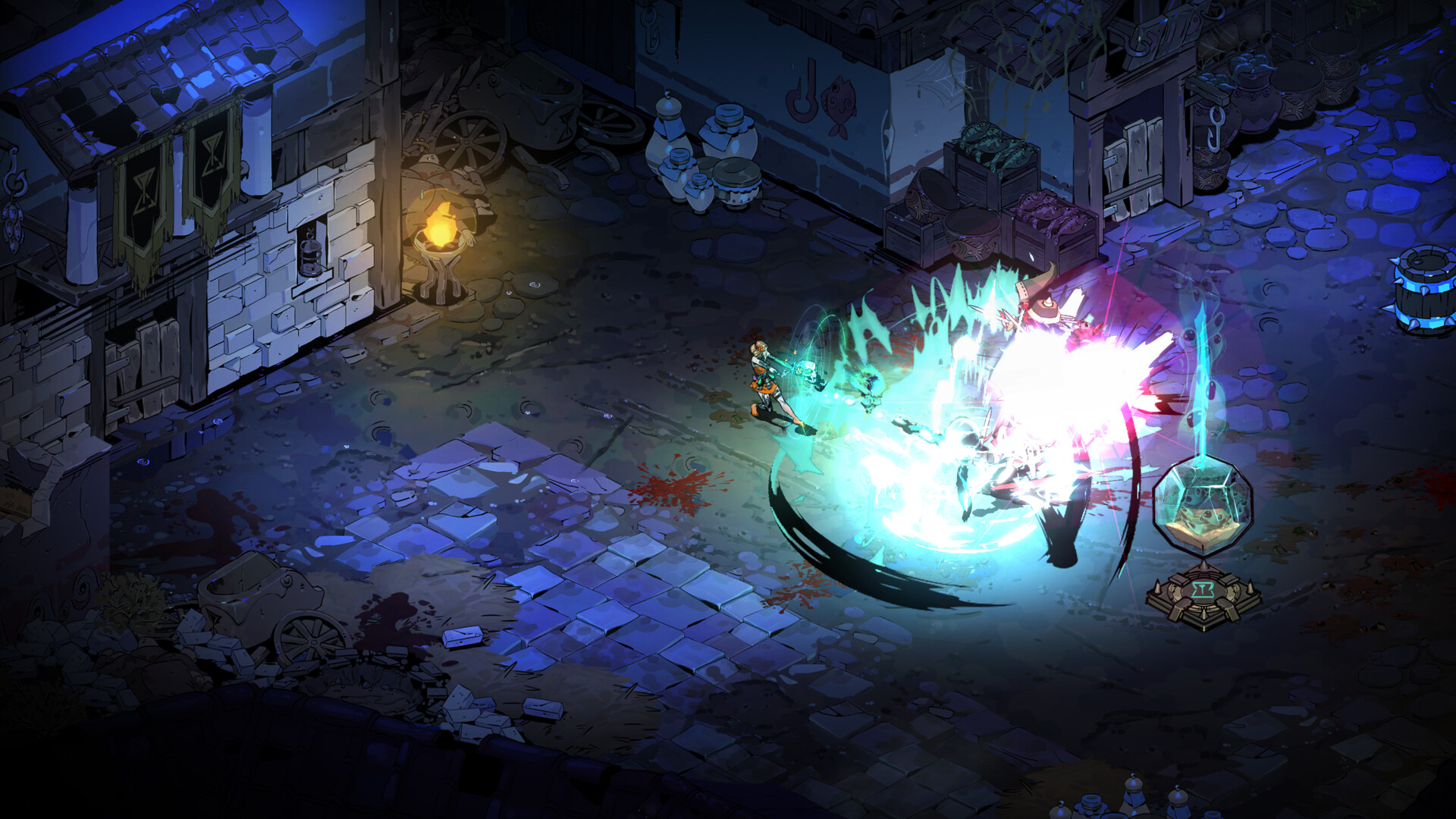
Every great roguelike needs a hub that makes you want to come home, and the Crossroads might be the best one ever designed. Where the House of Hades served as a stylish but relatively static base of operations, the Crossroads is a living community that grows and changes with every hour you invest in it.
The Crossroads begins as a bare clearing with a handful of NPCs and a cauldron. By the time you've sunk thirty or forty hours in, it's a thriving settlement. Characters arrive, build structures, establish routines. You can craft incantations at Hecate's cauldron that permanently alter the game's rules and unlock new systems. You can forge new weapons. You can tend a garden that yields resources for crafting. You can fish, gather ingredients, and cook meals that provide run bonuses.
None of this feels like busywork. Every activity in the Crossroads feeds back into the core loop in some way. Gardening yields reagents for incantations. Fishing provides materials for weapon upgrades. Cooking offers meaningful buffs that can shift a run's trajectory. The economy is tight and well-balanced, with just enough scarcity to make resource decisions interesting without ever becoming punishing.
But the real magic of the Crossroads is its social layer. The NPC conversations that happen between runs are some of the best writing in the game. Characters develop relationships with each other, not just with Melinoë. Rivalries form. Alliances shift. Secrets emerge. The Crossroads feels like a community with its own dynamics, and spending time there never feels like a detour from the "real" game. It is the real game, as much as any boss fight or boon combination.
The romance system deserves special mention. Supergiant has expanded and deepened the relationship mechanics significantly, with multiple romance options across both the underworld and surface casts. The romances unfold naturally over dozens of runs, with branching dialogue that responds to your choices and your progress. They're written with genuine emotional intelligence, avoiding the transactional feel that plagues romance systems in most games, and they tie into the larger narrative in ways that feel earned rather than bolted on.
A Feast for the Senses
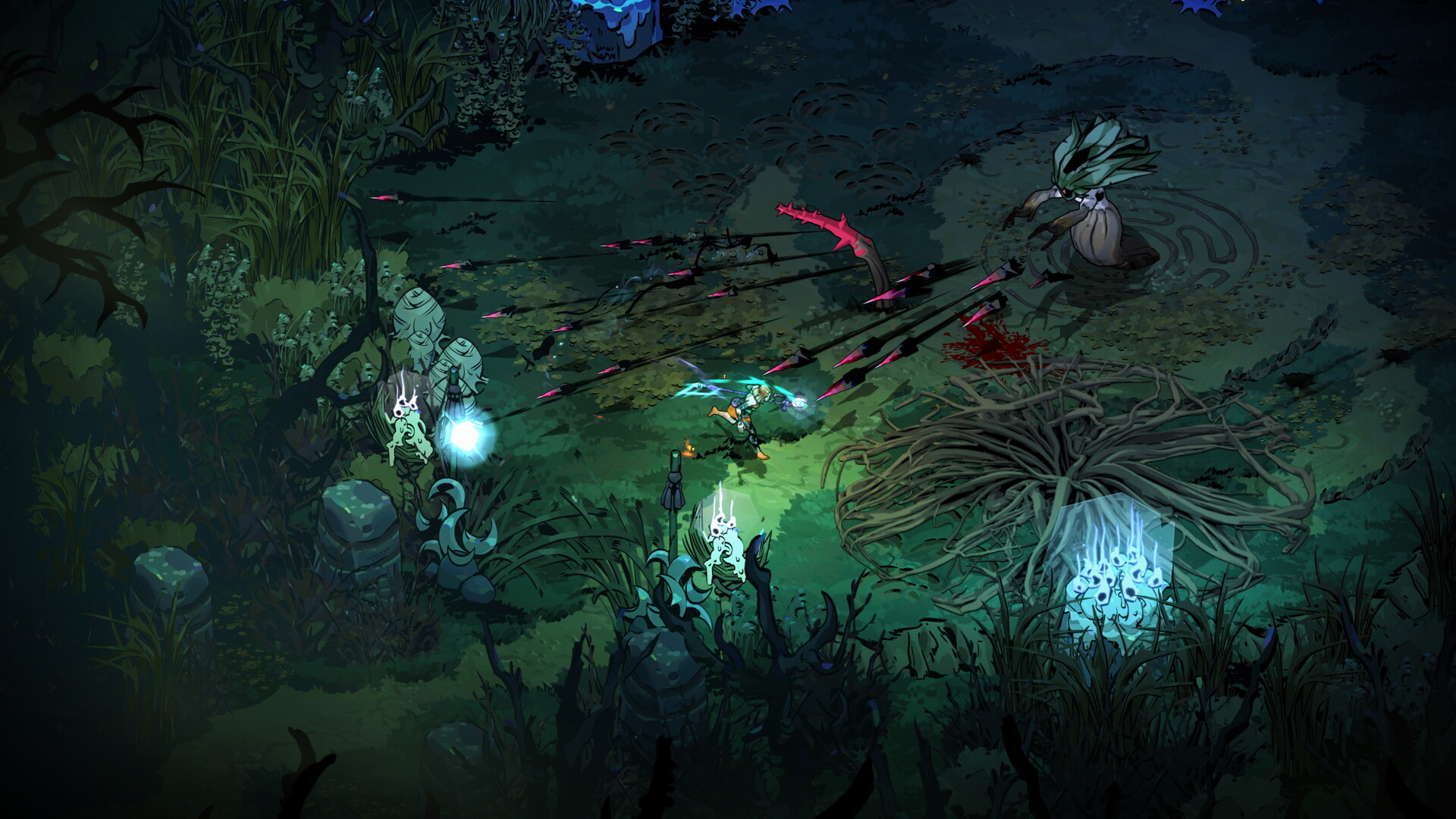
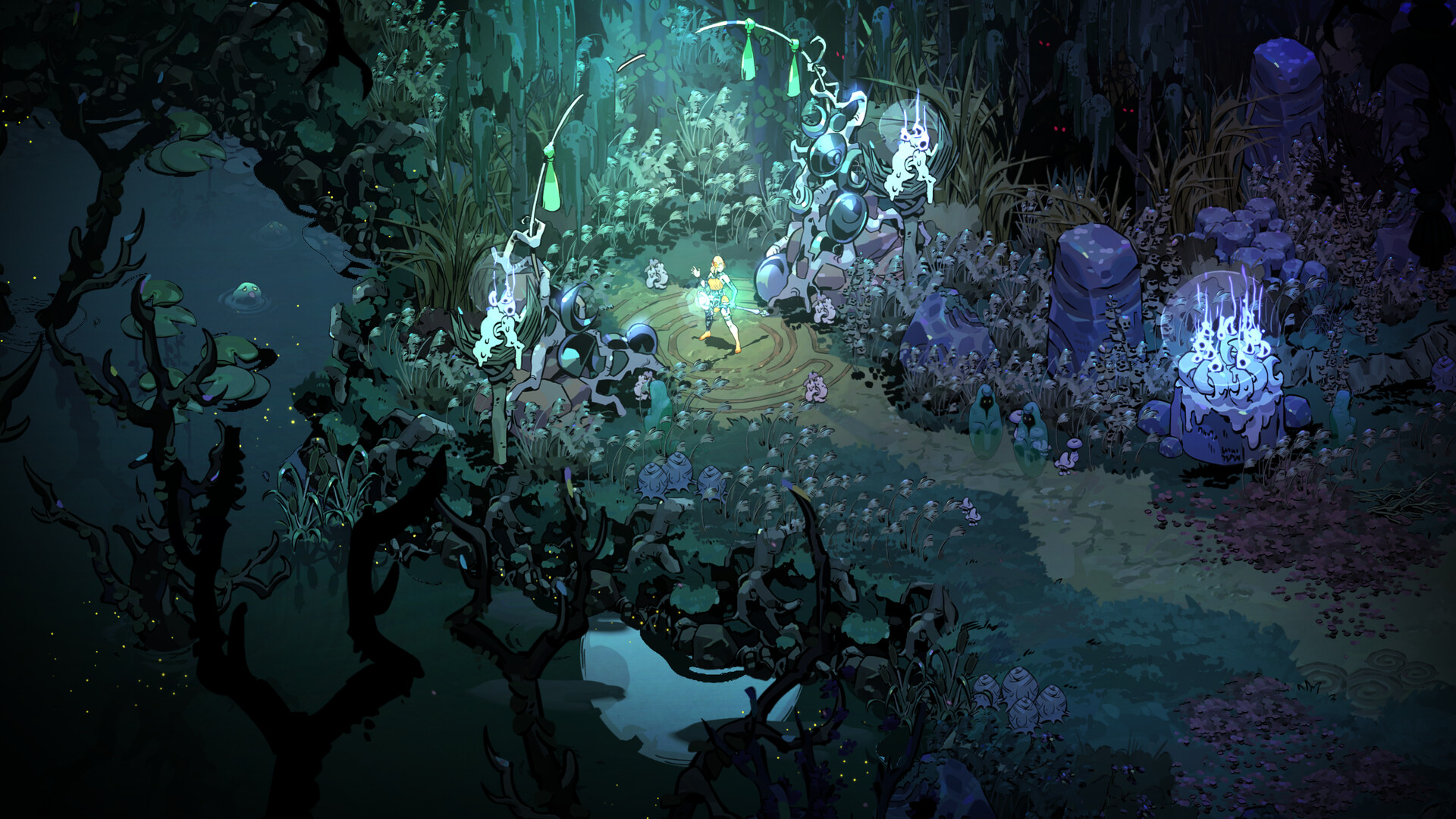
Supergiant Games has always punched above its weight visually, and Hades II is the studio's most gorgeous game by a considerable margin. The hand-painted art style has been refined to a degree that makes every frame look like a mythological illustration come to life. Character portraits are stunningly detailed. Environments pulse with color and light. Spell effects layer on top of each other in ways that should create visual noise but instead achieve a kind of controlled chaos that's always readable, always beautiful.
The Underworld zones are moody and atmospheric, all deep purples and sickly greens and rivers of ghostly light. The surface zones are their perfect counterpoint: sun-drenched Mediterranean landscapes, storm-wracked cliffsides, and the impossibly grand architecture of Olympus itself. The contrast between the two routes isn't just mechanical — it's aesthetic, and toggling between them keeps the visual experience fresh across hundreds of runs.
Character design reaches new heights across the board. Melinoë's animations are fluid and expressive, conveying personality through every dash and strike. The gods have been redesigned with a level of detail that makes each one feel like a work of art. Enemy designs range from hauntingly beautiful to genuinely unsettling, and the bosses are visual spectacles that match their mechanical complexity.
And then there's the music. Darren Korb returns alongside new collaborator Austin Wintory, and the resulting soundtrack is nothing short of extraordinary. Korb's signature blend of rock, folk, and electronic elements gains new depth through Wintory's orchestral contributions, creating a score that shifts seamlessly between pulse-pounding combat tracks and achingly beautiful hub themes. The vocal performances are particularly stunning — several songs will be lodged in your memory for weeks after hearing them, and the way the music dynamically shifts during boss encounters adds an emotional dimension to fights that pure mechanics alone couldn't achieve.
The full voice acting is exceptional throughout. Every line of dialogue — and there are thousands upon thousands of lines — is performed with care, personality, and dramatic weight. Logan Cunningham, Supergiant's secret weapon, brings his characteristic gravitas to multiple roles, while Asa Butterfield's contributions add a new texture to the cast. No character feels phoned in. No line feels wasted. It's a benchmark for voice acting in games, and it's a huge part of why the story lands as hard as it does.
Console Performance — The Definitive Couch Experience
Let's get to the part that console players have been waiting for: how does it run? The answer, on both platforms, is exceptionally well — but with some interesting differences between the PS5 and Xbox Series X versions that are worth breaking down.
On PlayStation 5, Hades II targets and consistently holds 120 frames per second in its performance mode. Throughout my review period, I encountered frame drops so rarely that I could count them on one hand, and all occurred during the most particle-dense moments of late-game boss encounters. For all practical purposes, this is a locked 120fps experience, and it transforms the game. The responsiveness, the fluidity of animation, the precision of dash timing — everything benefits from the doubled frame rate, and once you've played Hades II at 120fps, 60fps feels like wading through honey.
Loading times on PS5 are impressive. Cold boot to the main menu takes approximately 7 to 8 seconds. Loading a save file adds another 3 to 4 seconds. Given the speed of the roguelike loop — die, learn, restart — these load times are essential, and Supergiant has clearly prioritized them. The transition between death and a new run is nearly seamless.
The DualSense implementation, as mentioned earlier, is outstanding. Beyond the haptic feedback and adaptive trigger integration, the controller's lightbar shifts color based on which god's boon you're currently wielding, creating a subtle ambient effect that's surprisingly immersive in a dark room. Trophy support is comprehensive, with a platinum path that's challenging but achievable. Activity Cards provide quick access to specific runs and challenges. Remote Play works flawlessly for portable sessions, though the reduced resolution makes some of the finer visual details harder to appreciate.
On Xbox Series X, the game also hits 120fps with comparable consistency. The visual output is effectively identical — any differences are imperceptible without side-by-side comparisons and a pixel counter. Where the Xbox version differs is in load times: 14 to 15 seconds to the menu from a cold boot, and 4 to 5 seconds to load a save. These are still fast by any reasonable standard, but the PS5's SSD advantage is measurable here.
The Xbox version does have its own exclusive advantages. Quick Resume support means you can jump between Hades II and other games without losing your place, which is genuinely useful for a game designed around short sessions. Play Anywhere support syncs progress between Xbox and PC. And for Game Pass subscribers, the value proposition is extraordinary — one of the highest-rated games of the decade, available day one on a subscription service.
Both versions support HDR, and the implementation is superb. The god-boon effects, the rivers of spectral energy, the lightning and flame and ice — they all pop with a vibrancy that SDR can't match. If you have an HDR display, turn it on. The game was clearly designed with high dynamic range in mind.
Minor Cracks in the Marble
No game is perfect, and intellectual honesty demands that I address the areas where Hades II falls short of its own extraordinary standards. These are minor complaints in the context of the overall experience, but they exist, and they're worth noting.
The auto-aim system on console is occasionally unreliable. In rooms with high enemy density, attacks will sometimes target a low-priority enemy on the far side of the screen instead of the immediate threat in front of you. This is particularly noticeable with ranged weapons and the cast ability. A manual targeting option or a more aggressive proximity-weighting algorithm would solve this immediately, and it's the kind of issue that a post-launch patch could easily address.
There's also a degree of boss repetition that becomes apparent in the late game. Because both routes share certain structural beats — four regions, each ending in a boss — and because the roguelike format means you'll fight these bosses dozens of times, a few of the encounters start to feel like obstacle courses rather than dramatic confrontations after the thirtieth or fortieth attempt. The bosses themselves are well-designed, but the game could benefit from more phase variation or random modifiers to keep long-term repeated encounters feeling fresh.
The ending has proven somewhat divisive among the player community, and I understand why. Without spoiling specifics, the resolution of certain character arcs feels rushed compared to the meticulous pacing of everything that precedes it, and there are narrative threads that feel like they were set up for a more elaborate payoff than they ultimately received. It's not a bad ending by any stretch — it's emotionally satisfying and thematically coherent — but in a game where every other element feels so carefully calibrated, the slight unevenness of the final act stands out more than it otherwise would.
Finally, and this is the most subjective criticism, the game's sheer density can occasionally feel overwhelming for newcomers. There are so many systems, so many currencies, so many characters, so many boon interactions, and so many progression paths that the first five to ten hours involve a steep learning curve. Veteran roguelike players will adapt quickly, but if Hades II is your entry point to the genre, expect some initial confusion before the pieces start clicking into place.
The Verdict
Hades II on console is not merely a competent port of a great game. It is the best version of a game that was already among the finest of its generation. The 120fps performance on both PS5 and Xbox Series X transforms the feel of combat. The DualSense features add a tactile dimension that enhances immersion without ever feeling gimmicky. The quick load times preserve the addictive rhythm of the roguelike loop. And the game itself — the combat, the story, the music, the art, the writing, the sheer ambition of its dual-route structure — remains a towering achievement.
Supergiant Games has done something remarkable here. They took a game that many considered the pinnacle of its genre and made a sequel that surpasses it in nearly every dimension. Melinoë's journey is darker, richer, and more mechanically complex than Zagreus's, and the console release ensures that the widest possible audience can now experience it at its best.
Minor issues with auto-aim targeting, late-game boss repetition, and a slightly uneven ending prevent this from being an absolutely flawless experience. But in the grand context of what Hades II accomplishes — the depth of its systems, the quality of its writing, the precision of its combat, the generosity of its content — these are footnotes in a masterwork.
If you own a PS5 or an Xbox Series X, you owe it to yourself to play this game. If you've already played it on PC or Switch, the console version offers enough new texture — the haptics, the performance, the couch experience — to justify a second journey through the Underworld. And if you've never played a Hades game before, there has never been a better place to start.
Supergiant's masterpiece has arrived on console with godlike grace. Don't let it pass you by.
GamePulse Score
OUTSTANDING
Gameplay
95/100
Story
93/100
Visuals & Audio
96/100
Console Performance
94/100
Value
95/100
Replay Factor
97/100
Pros: Exceptional 120fps performance on both consoles, outstanding DualSense integration, vastly expanded combat and progression systems, two full routes that double the content, some of the best writing and voice acting in gaming, a soundtrack that haunts your dreams.
Cons: Auto-aim targeting can be unreliable in dense encounters, some late-game boss repetition, slightly uneven final act pacing, steep initial learning curve for genre newcomers.
Reviewed on: PlayStation 5 | Also available on: Xbox Series X/S, PC, Nintendo Switch