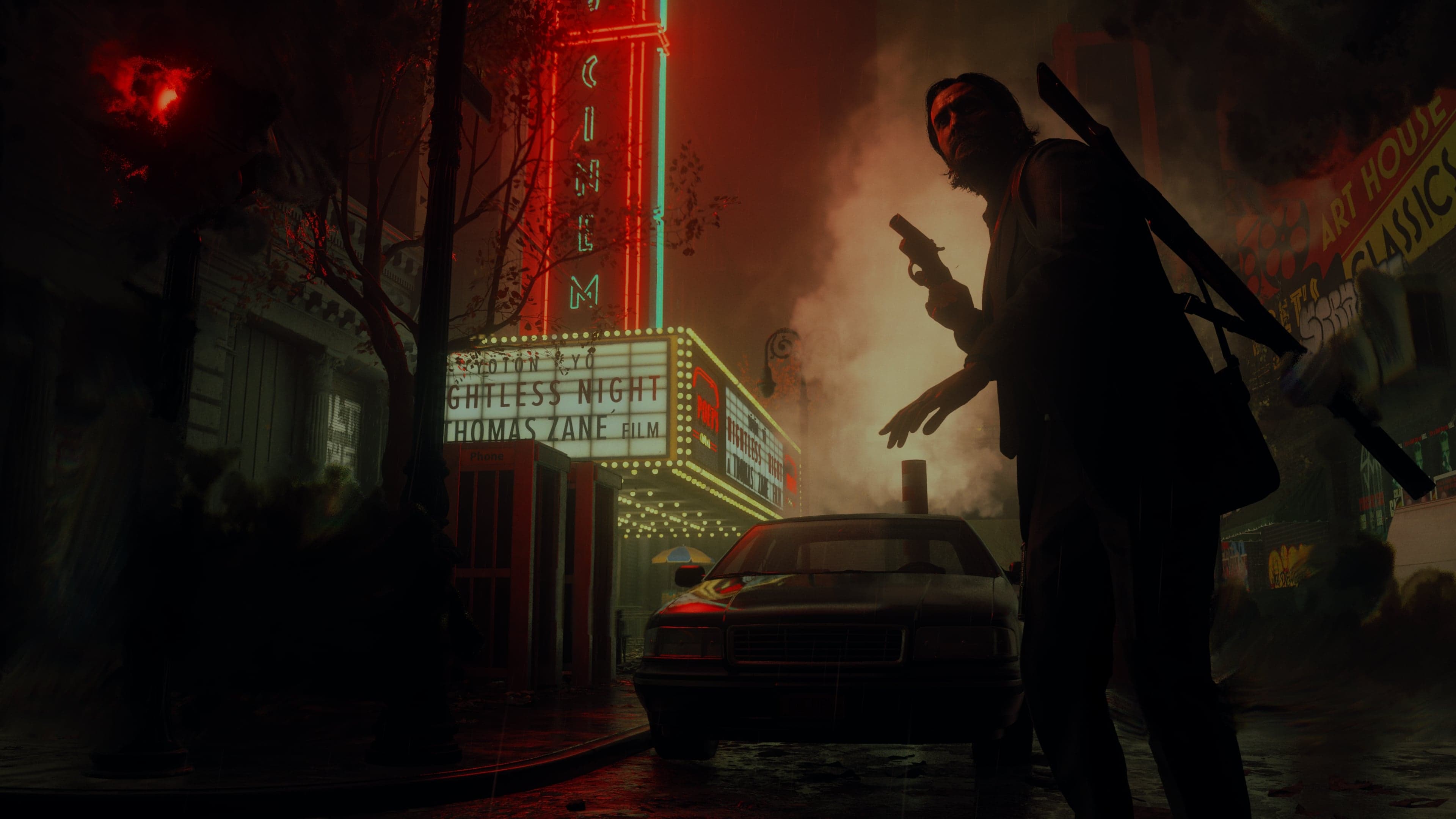
Thirteen years is a long time to wait for a sequel, but Alan Wake 2 makes every one of those years feel justified. Remedy Entertainment has not simply made a follow-up to their cult classic thriller; they have crafted one of the most ambitious and artistically daring games of the generation. This is a survival horror experience that challenges what interactive entertainment can be, blending gameplay, live-action film, music, and narrative experimentation into something that feels genuinely new. It is weird, it is wonderful, and it is utterly unlike anything else on the market.
The game splits its narrative between two playable protagonists whose stories mirror and distort each other in fascinating ways. Saga Anderson, an FBI agent investigating ritualistic murders in the Pacific Northwest town of Bright Falls, provides a grounded detective framework. Her sections emphasize exploration, clue-gathering, and a methodical approach to unraveling the mystery. Alan Wake, trapped in the nightmarish Dark Place for thirteen years, occupies a more surreal space where reality itself is malleable and narrative structure becomes a gameplay mechanic. The ability to switch between these two stories at will creates a unique pacing rhythm that keeps both threads feeling fresh.
Saga's Mind Place is a standout mechanic that transforms investigation sequences into something genuinely engaging. A mental construct she can enter at any time, it serves as a case board where collected evidence and clues are connected to form deductions. Profiling suspects by combining observations with intuition creates satisfying puzzle moments, and the physical space of the Mind Place evolves as your investigation deepens. It makes you feel like a detective in a way that few games achieve, rewarding careful attention to environmental details and dialogue.
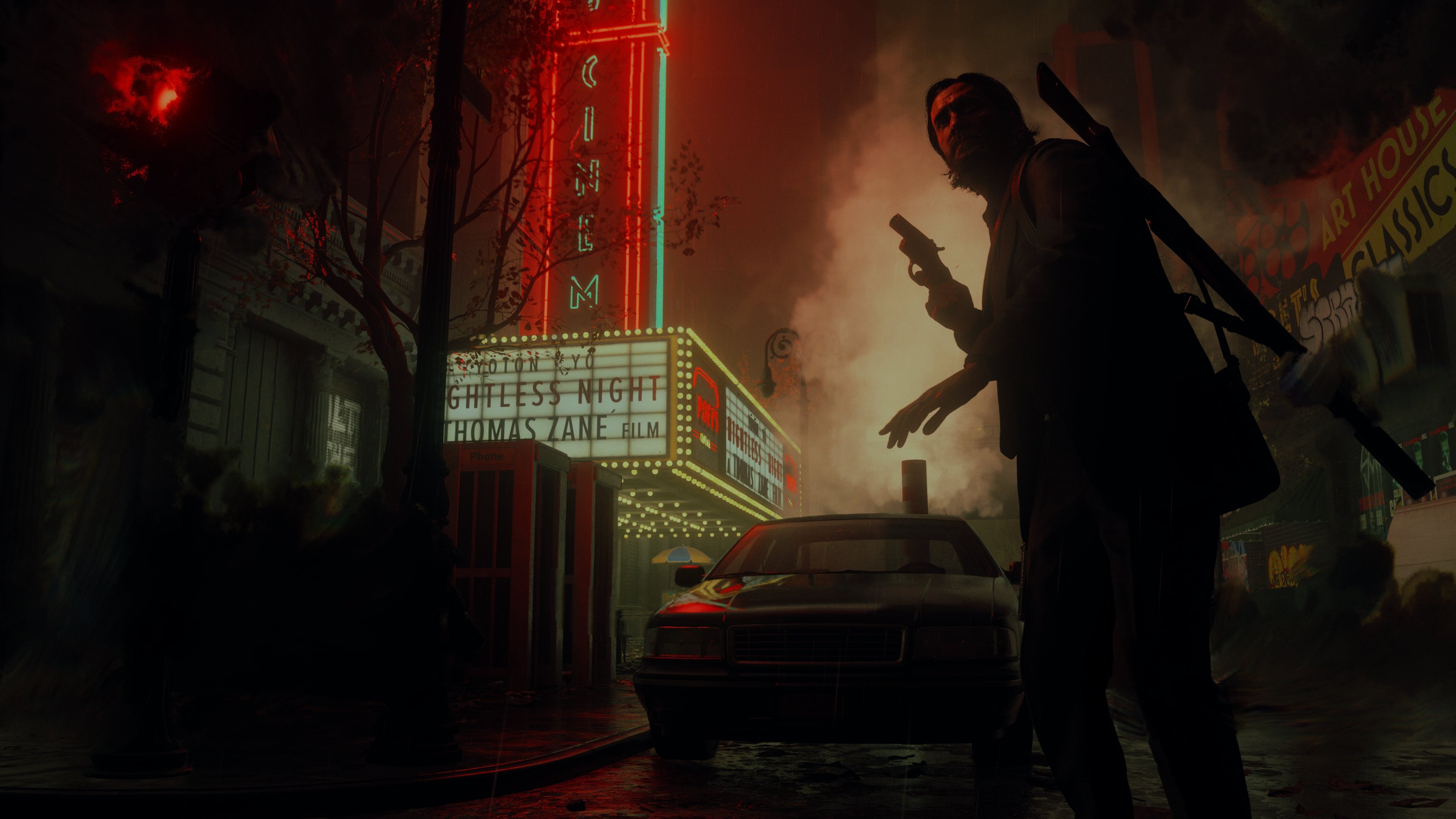
Alan's sections in the Dark Place are where Remedy's creative ambitions truly soar. The Writer's Room mechanic allows Alan to rewrite reality by placing narrative elements into different scenes, literally reshaping the environment to progress. Walking through a New York City that constantly shifts and transforms around you, where a jazz club morphs into a crime scene and buildings rearrange themselves like pages being shuffled, creates an atmosphere of creeping surrealism that is genuinely unsettling. The Dark Place is one of the most memorable settings in horror gaming, a labyrinth of Alan's own making that traps him in loops of his own narrative.
The live-action sequences deserve particular attention as a groundbreaking achievement. Rather than feeling like dated FMV gimmicks, these filmed segments are directed with genuine cinematic craft and integrate seamlessly into the gameplay experience. Sam Lake's performance as Alex Casey, a character within a character, is delivered with an intensity that elevates every scene he appears in. Musical sequences, including a now-legendary performance that occurs mid-game, demonstrate a willingness to experiment with form that is rare in any medium, let alone video games.
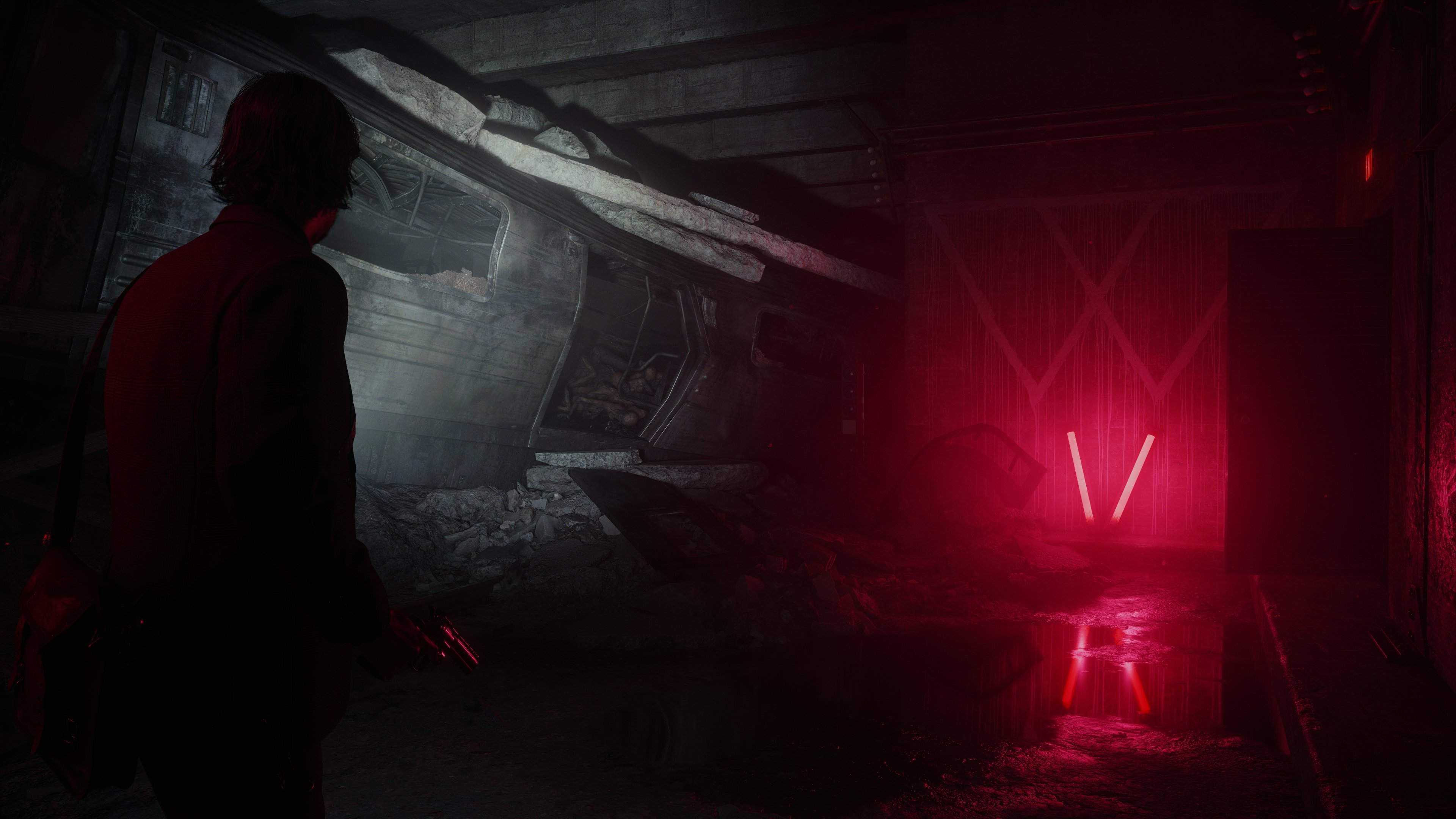
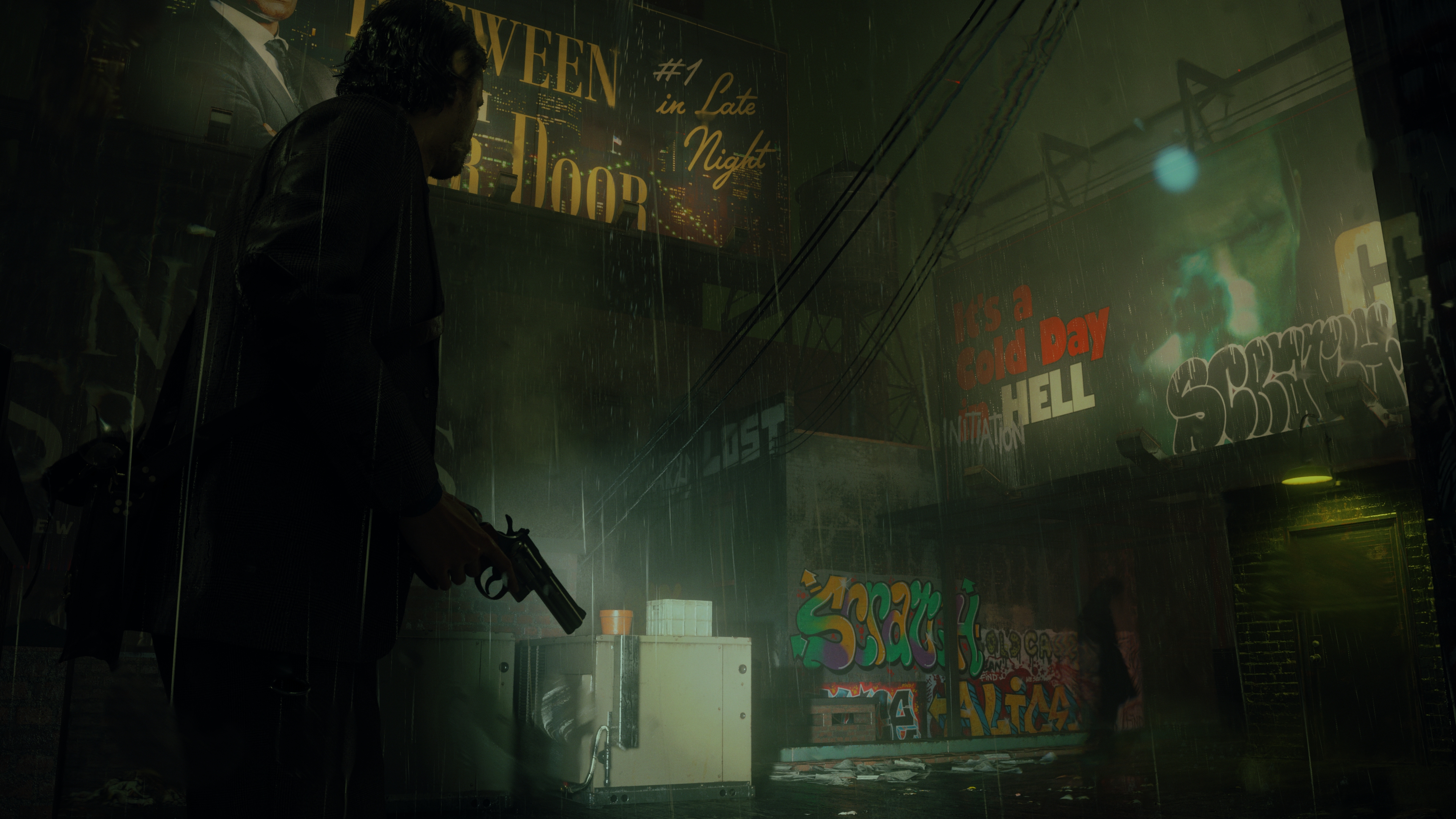
Visually, Alan Wake 2 is a technical showcase. The Northlight engine produces some of the most realistic lighting and environmental detail ever seen in a game. Rain glistens on every surface in Bright Falls, volumetric fog crawls through forests with eerie realism, and the neon-soaked streets of the Dark Place's twisted New York are rendered with stunning fidelity. Character models are extraordinarily detailed, with facial animations that convey subtle emotion in ways that enhance the storytelling. This is a game that demands to be played in the dark with headphones, because the atmosphere it creates through visual and audio design is genuinely exceptional.
Combat is built on the original's flashlight-and-firearm loop but refined with modern survival horror sensibilities. Enemies must have their darkness shields burned away with light before they can be damaged, creating a resource management tension that keeps encounters feeling dangerous even in the late game. However, the combat encounters do become somewhat repetitive as the game progresses, and certain arena-style fights can feel like they slow down an otherwise masterfully paced experience. The limited enemy variety, while thematically justified, occasionally makes combat feel like an obstacle between narrative beats rather than a complementary system.
The game's technical demands are steep. Even on high-end hardware, maintaining stable framerates requires significant compromises, and ray tracing, while gorgeous, comes at an enormous performance cost. The recommended specifications place Alan Wake 2 among the most demanding titles on the market. While patches have improved optimization over time, players without top-tier hardware will need to make meaningful sacrifices to visual quality. This is a game that was clearly built with future hardware in mind, and it shows in both its stunning visuals and its punishing requirements.
Alan Wake 2 is not a game for everyone, and that is precisely what makes it special. It is uncompromising in its artistic vision, willing to confuse and challenge players in pursuit of something genuinely meaningful. Remedy has created a work that blurs the line between game, film, and experimental art in ways that feel organic rather than pretentious. It is a psychological horror experience that respects the intelligence of its audience, and it rewards patience and attention with a narrative that unfolds like the best kind of mystery novel, one where every answer raises new questions and the final page leaves you staring at the ceiling, trying to piece it all together.