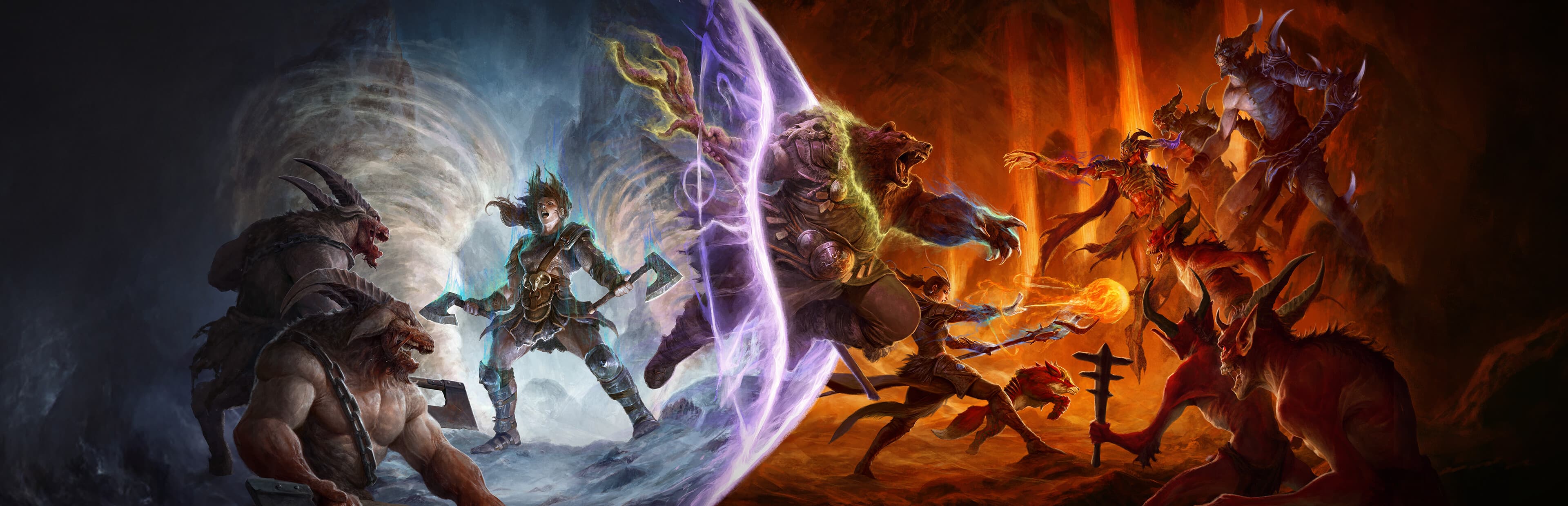
Diablo 4 has been on one of the most dramatic recovery arcs in modern gaming. Three years after a launch that divided the community and a Vessel of Hatred expansion that left many players wanting more, Blizzard has delivered the definitive statement the franchise needed. Lord of Hatred is not merely a competent expansion. It is the clearest declaration yet that Diablo 4 has become the action RPG Blizzard always promised it would be, and the kind of capstone that makes the years of iteration feel meaningful in hindsight.
This is a thirty-plus-hour package of new content wrapped around a six-to-eight-hour campaign, two genuinely distinct classes, the Mediterranean-inspired Skovos Isles, a top-to-bottom skill tree rework, the return of the Horadric Cube, and a new endgame progression system called War Plans. Some of these pieces work brilliantly. Others work well. None of them feel phoned in, and the sum is comfortably the most substantial expansion in the series since Lord of Destruction defined what a Diablo add-on could be nearly a quarter century ago.
A Campaign That Actually Lands
The Lord of Hatred campaign concludes the Mephisto arc that has simmered through the base game and Vessel of Hatred, and it does so with a confidence that earlier stretches of Diablo 4's story sometimes lacked. You begin on a mainland still reeling from the events of the previous expansion, and a mysterious summons from the Amazons of the Skovos Isles pulls your Wanderer across the sea into a region Blizzard has never before brought to life. What follows is a focused, character-driven story that feels more like a late-season episode of prestige television than a typical ARPG add-on.
Mephisto has assumed the identity of Akarat, the prophet who gave the Paladins their calling centuries ago. That single twist colors the entire campaign. Every NPC who invokes Akarat's name is unknowingly praising the Lord of Hatred himself. Every shrine you pass, every hymn you hear echoing through a Skovos temple, every piece of scripture that scholars quote across the region becomes part of a slow, creeping horror as you realize how deeply Mephisto has woven himself into the faith of the mortals. Blizzard's writers have used the lore of their own world against the player in a way that Diablo 3's tighter storytelling never attempted, and it pays off.
The supporting cast is the strongest the series has assembled. Queen Adreona of the Amazons carries the weight of a civilization that has been quietly preparing for this moment for generations. Lilith, still the franchise's most complicated character, returns in a role that will divide the community but which the campaign earns. There is a midgame sequence involving the Horadric Order and the mainland's surviving Paladins that uses returning faces from Diablo 2 in a way that feels like fan service done right — acknowledgment of the past rather than leaning on it.
Not everything about the writing works. There is an emotional beat in the third act that leans harder on shock than on earned resolution, and a couple of Amazon characters are reduced to mouthpieces for exposition rather than given the agency the setting seems to demand. The ultimate confrontation with Mephisto threads that needle brilliantly, though, delivering the kind of final encounter the base game's disappointing last boss fight should have been. The cinematic that caps the campaign is, bluntly, the best piece of animation Blizzard has produced in years.
Critically, the pacing respects your time. Six to eight hours for a main questline is the right length for an expansion. The previous expansion's campaign stretched past its welcome with padding; Lord of Hatred trims the fat and trusts that the endgame will carry players forward rather than trying to extend the story itself. By the time the credits roll, you feel the weight of the ending without feeling exhausted by the road there.
The Paladin: A Familiar Power Fantasy, Thoughtfully Rebuilt
Reintroducing a class from Diablo 2 is a delicate operation. Fans arrive with specific expectations about how Hammerdins or Zealots should feel, and falling short of those memories is worse than simply designing something new. Blizzard has navigated the tightrope successfully with the new Paladin, delivering a class that honors the archetype while fitting cleanly into Diablo 4's sensibilities.
The Paladin operates on a Faith resource generated by basic attacks like Advance, Brandish, Holy Bolt, and Clash. Faith is then spent on core skills that range from sanctified hammers to concussive shield slams to light-infused sword strikes. The class is Diablo 4's second strength-based class after the Barbarian, but it plays very differently. Where the Barbarian is about momentum and building up through weapon swaps, the Paladin is about holding ground, absorbing damage, and turning incoming punishment into outgoing power.
Shield Bash is the early standout skill, functioning as both a movement ability and a heavy-hitting damage dealer. Holding the button down lets you charge forward with your shield, and the charge distance scales with how long you hold. It is the best mobility option the class has early, and the fact that it deals respectable damage makes it a core part of most builds in the first ten or fifteen hours of the expansion. Later, aspects and legendary interactions let Shield Bash spawn Holy Bolt projectiles on impact or convert a portion of damage taken into healing, and the skill becomes the centerpiece of a durable, aggressive playstyle.
Auras return and are one of the genuine highlights of the class. Rather than the toggled passive buffs of Diablo 2, Diablo 4's auras are active skills with cooldowns that temporarily amplify the Paladin and nearby allies while also weakening enemies in the radius. The Conviction aura reduces enemy resistances, Fanaticism boosts attack speed for the party, and Thorns causes melee attackers to take reflected damage scaled by the Paladin's armor value. In group content, a well-built Paladin rotating auras in sequence becomes a force multiplier for the entire party in a way no other class matches.
The class is not without friction. The early game, before the Paladin has built up aspect density and key legendary items, can feel slow. Clear speed in the first ten levels of the expansion lags behind what Warlock or even the base game's Sorcerer can deliver, and the core skills do not chain into each other as elegantly as the Barbarian's weapon combos. Reviewers who have dismissed the Paladin as underwhelming are typically describing this stretch, and the criticism is fair as far as it goes. By the time you hit Torment tier and the build starts coming online, though, the class transforms into one of the most complete packages in the game. It is a slow burn, but the payoff is real.
If there is a philosophical critique to make, it is that the Paladin plays it safe in a way the Warlock does not. This is a solid, confident execution of a familiar idea rather than a reinvention. That may be exactly what a certain segment of the fanbase wants, and Blizzard has clearly targeted the Paladin at players who have been waiting for a specific power fantasy since Diablo 2. For them, it lands. For players looking for something genuinely new, the Warlock is the more interesting pick.
The Warlock: The Star of the Show
If the Paladin is Blizzard honoring tradition, the Warlock is Blizzard flexing. This is the most creative class design the studio has produced since Diablo 3's Crusader, a hybrid summoner-caster that blurs lines between Necromancer, Sorcerer, and the old Druid archetypes while landing on an identity entirely its own. Where the Necromancer summons skeletons, the Warlock summons demons and binds them through pacts that literally rewrite how the class interacts with damage, resources, and the passage of time.
The Warlock's primary resource is Essence, which it generates by cursing enemies and spends on core abilities. But the resource management is only half the mechanical identity. The other half is the Pact system, a meta-layer where the Warlock chooses to bind to one of three demonic patrons — the Lord of the Pit, the Mother of Flies, and the Whispering Choir — each of which fundamentally reshapes how its skills behave.
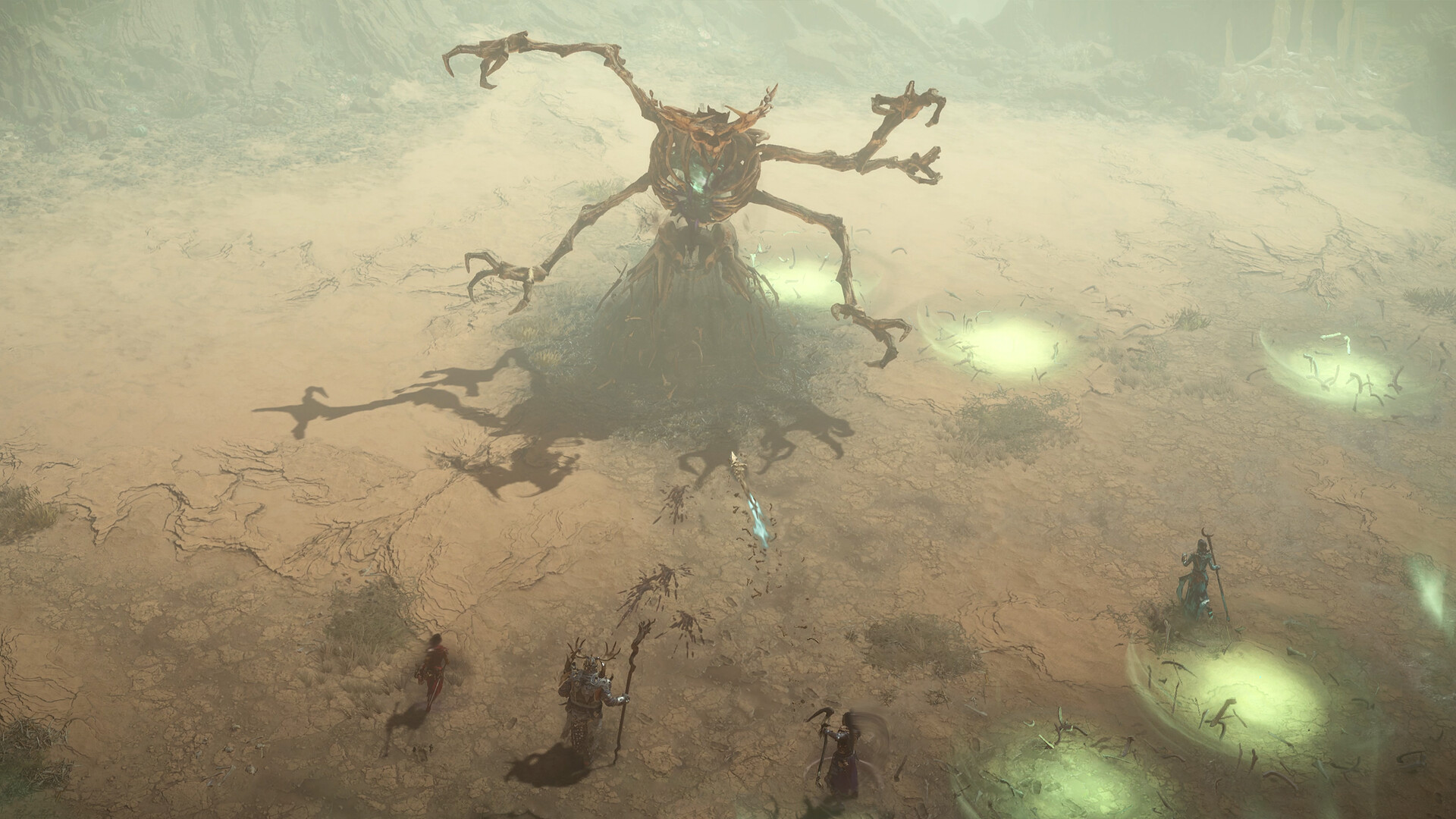
A Lord of the Pit Warlock is a brute-force summoner. You bind to a single massive demon that grows in power as you feed it souls from slain enemies, and your skills are rebalanced around keeping that demon alive and fed. Late in a run, the demon becomes a lumbering juggernaut that can tank elite packs while you pelt enemies with claw-based curses that bounce between targets. This is the build most reviewers have gravitated toward because it is the most immediately satisfying — watching your bound demon grow from a knee-high imp at level one to a skyscraping abomination by Torment difficulty is one of the expansion's most reliable joys.
The Mother of Flies pact, by contrast, is a swarm build. Your summons become clouds of insects and lesser demons, numbering in the dozens at any given time, and your curses cause afflicted enemies to explode and spawn more swarm units on death. It is the chaos build, the one where the screen becomes nearly unreadable in the best possible way. The density of minions creates a crowd control buffer that protects the Warlock while dealing constant passive damage, and it excels in the crowded set pieces the expansion throws at you with increasing frequency.
The Whispering Choir pact is the most experimental of the three. Instead of summoning discrete creatures, you bind to an amorphous entity that possesses your gear and your curses, causing weapons to speak in alien tongues and enemies to hear whispers that drive them to attack each other. It is a curse-and-debuff build with almost no direct damage, and it rewards players who want to turn encounters into theater pieces where the Warlock is the puppeteer rather than the protagonist. It is also the build that takes the longest to come online, and the one that probably needs a balance pass before it is competitive with the other two in high-tier endgame content.
What makes the Warlock work beyond the mechanical novelty is the tone. Every visual effect, every voice line, every ability animation sells the idea that this is a class that has made a dangerous bargain. The Warlock mutters under their breath during combat. Their idle animations show them wringing their hands or muttering at shadows. Damage numbers appear in jagged, handwritten typography rather than the clean sans-serif the rest of the game uses. The aesthetic commits, and it commits hard.
Early-stage Warlock play can be rough. Without crowd control options beyond one unreliable stun, the class can get overwhelmed in dense packs. Essence management in the first few levels is tight, and the demon summoning process has a cast time that punishes bad positioning. Reviewers noting that the Warlock struggles early are describing real friction. Once you hit the mid-teens and unlock the first pact bind, though, the class opens up into one of the most flexible and expressive options in Diablo 4's roster.
Skovos Isles: The Best Environmental Art in the Series
Sanctuary has never looked like this. Skovos is a cluster of Mediterranean-inspired islands that range from sun-bleached coastal cliffs to volcanic interiors to forested highlands dotted with Amazon temples. The art direction draws on Greek, Crete, and broader Aegean influences, and it does so without feeling like a pastiche. White-washed cliffside towns give way to olive groves. Fishing villages cling to rocky coves. Abandoned temples sit half-submerged in the shallows. The variety across the region dwarfs what Nahantu offered in the previous expansion.
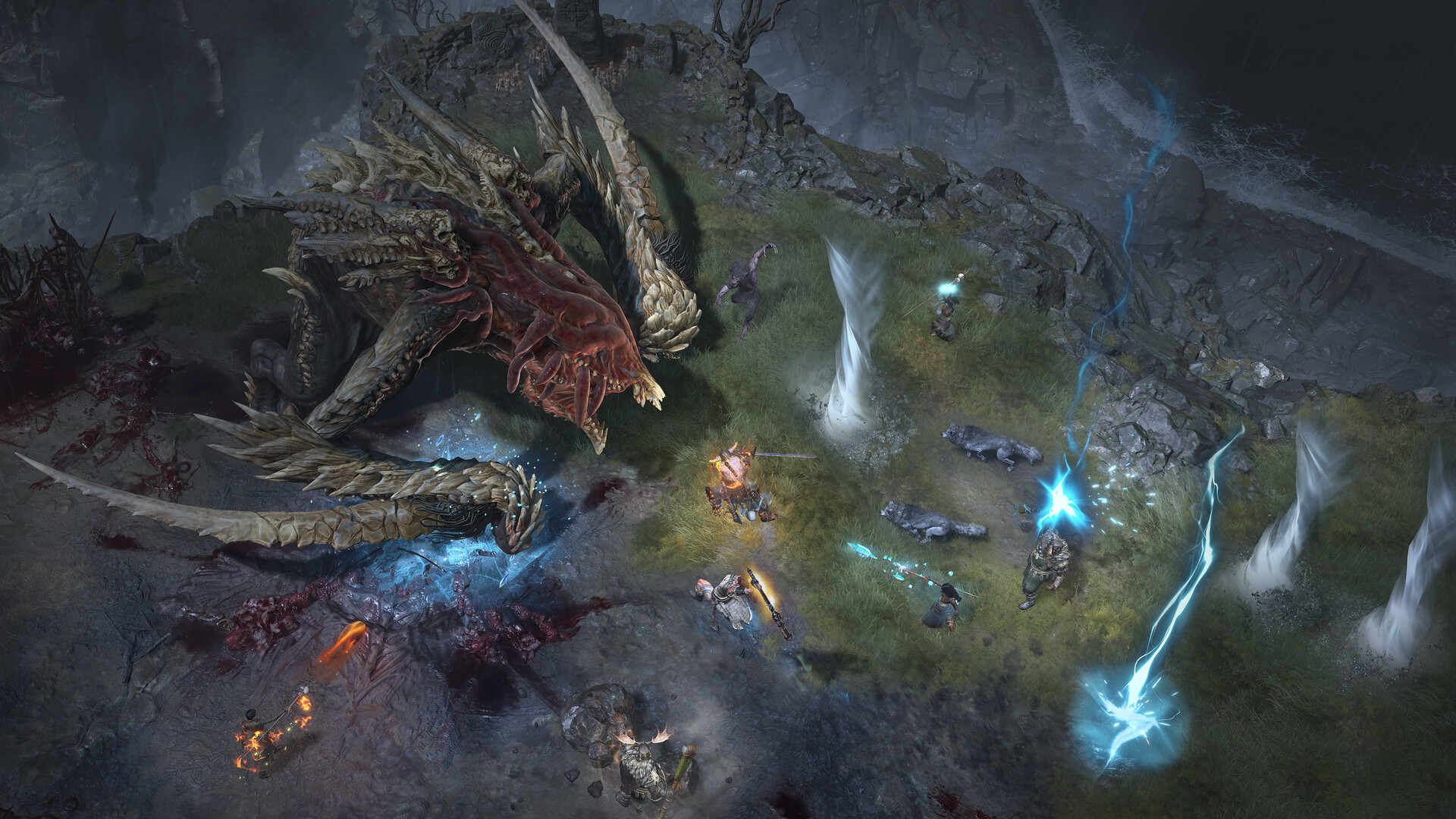
The environmental storytelling is the deeper pleasure. Skovos is a region in the middle of a slow apocalypse. Early zones feel vibrant and populated, but as you progress westward and deeper into the influence of Mephisto's cult, the vegetation petrifies, the sea turns oily, and the population thins. Entire villages appear frozen in time, townsfolk locked mid-step as Mephisto's corruption reaches further. The transition is gradual rather than binary, and the gradient of decay is one of the most effective pieces of atmospheric design Blizzard has ever produced in this series.
The dungeons are where the art team has been allowed to push the weirder. Several of the expansion's key dungeons venture into full-on demonic geometry — impossible architecture, gravity that inverts between rooms, set pieces that echo Diablo 3's more imaginative stretches without directly imitating them. One dungeon, a corrupted temple where the floors and ceilings swap when you cross thresholds, might be the single best visual moment in Diablo 4 to date. The team clearly took the opportunity to push beyond Sanctuary's usual gothic restraint, and the results justify the risk.
The music, composed by returning series mainstay Ted Mueller with additional contributions from the Two Steps from Hell duo, uses traditional Greek instruments — lyre, aulos, hand-drum — and layers them beneath the series' signature ambient dread. The soundtrack's willingness to breathe gives the environmental art room to land. Walking through an abandoned Amazon village with a solo lyre playing somewhere just out of earshot is one of the quietest, most effective atmospheric moments the series has produced.
The Skill Tree Rework: The Structural Change the Game Needed
Lord of Hatred ships alongside a complete rework of Diablo 4's skill trees that applies to every class, new and existing. This is a change to the base game that will reshape how every character plays, not just the new ones, and it is probably the single most important addition in the entire expansion package.
The old skill tree leaned heavily on passive nodes — small percentage bonuses to damage types, minor resource generation increases, modest defensive buffs. These were competent but forgettable, and they created a situation where high-level builds were defined almost entirely by legendary aspects and tempered affixes rather than by actual skill choices. The tree was a stat stick, not a build tool.
The new tree replaces most of those passive bonuses with active skill modifiers. Instead of a passive node that gives you five percent more lightning damage, you now have a node that causes your Chain Lightning to split into three bolts on hit. Instead of a flat increase to resource generation, you have a node that causes your first core skill after a dodge to refund its full cost. These are the kinds of interactions that used to be locked behind endgame legendary items, and pushing them into the baseline skill tree has cascading effects throughout the rest of the game.
The biggest consequence is that functional builds come online much earlier. I had a working Lightning Sorcerer build by level twelve that genuinely felt like a build, not a collection of random damage. That experience would have required twenty-plus hours of grind and a specific drop or two under the old system. The base game has been meaningfully improved by this change, and Blizzard deserves credit for shipping it to all players rather than gatekeeping it behind the expansion.
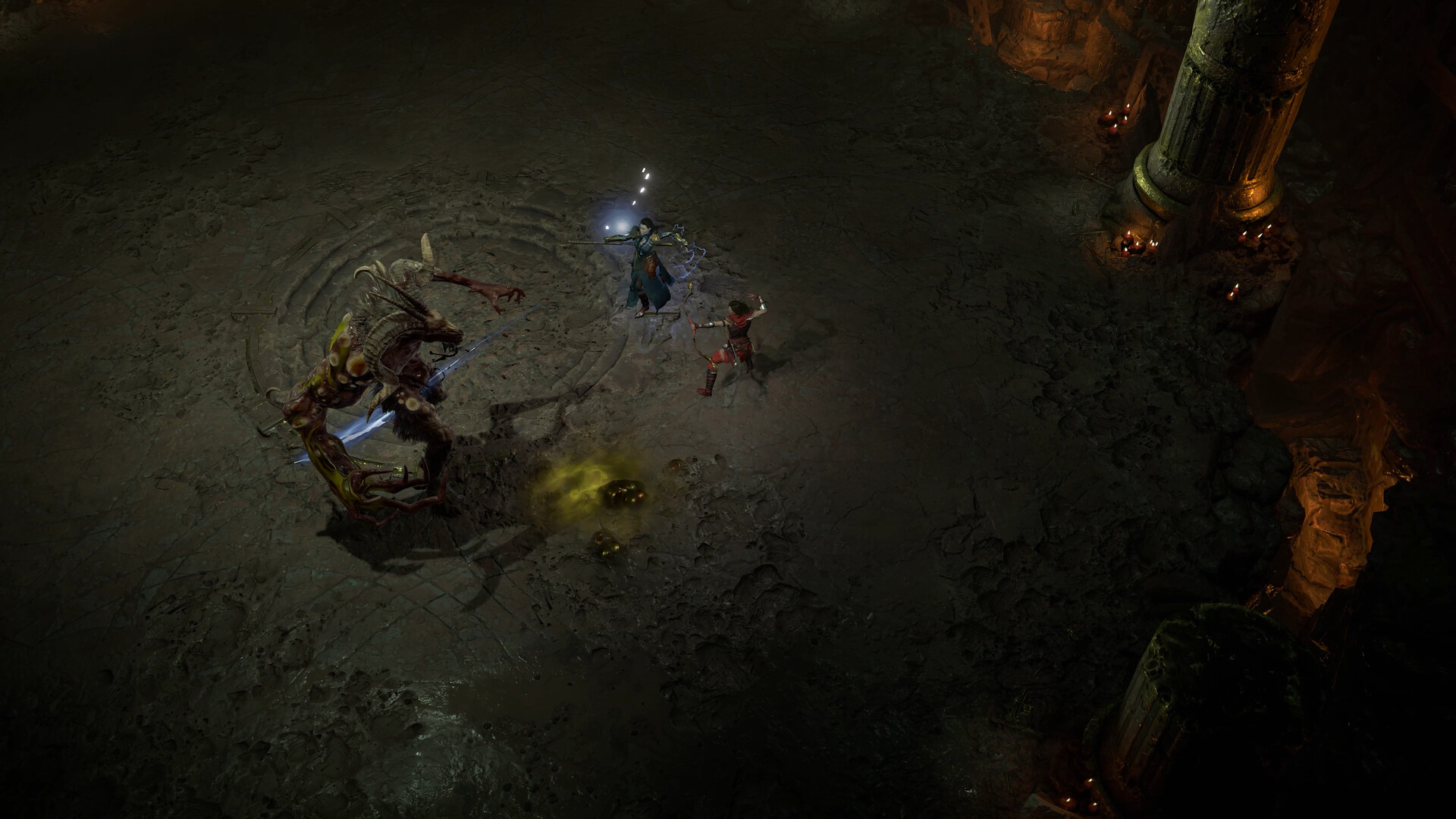
The talisman and charm system layered on top of the new skill tree is where the long-term build depth lives. Talismans are equippable utility items that occupy a new gear slot and grant significant passive effects — a fraction of the old skill tree's identity transplanted into a slot where it can compete with legendary aspects rather than being overshadowed by them. Charms are smaller items that slot into a grid on the Character tab and provide tiny but build-defining bonuses like plus-one to specific skill ranks or small amounts of crowd control reduction. Together, they reintroduce the loot-chase depth that Diablo 2's charm system delivered, without the inventory chaos that made that system a mess.
The rework is not perfect. Some of the old-tree talents that got folded into the new active modifier nodes feel more niche than they did before, and specific builds that relied on passive synergies have been quietly nerfed in the transition. Pure summoner Necromancer builds, in particular, have taken a hit in the early game until they pick up key new modifier nodes. The community will spend the next several patches untangling which builds have been winners and which have been losers. But the direction is correct, and the moment-to-moment feel of playing Diablo 4 is significantly better for it.
The Horadric Cube and the Crafting Comeback
The Horadric Cube is back, and it is one of the most unambiguously successful additions in the expansion. A Diablo 2 mainstay that Diablo 3 never quite replicated, the Cube lets you combine items to produce transmuted versions, affix-modified gear, and build-specific consumables. In Lord of Hatred, the Cube has been expanded into the central hub for gear customization, pulling together tempering, masterworking, and a new set of recipes that transform how loot feels at every stage of the game.
The most immediate effect of the Cube is that low-quality items are no longer disposable. Every drop has the potential to become something meaningful. A yellow sword can be cubed into an affix-rolled legendary base that is then tempered and masterworked into the weapon for your build. A stack of gems can be recombined into a higher-tier gem without the attrition that the old socketing system imposed. A pile of grey trash can be deconstructed into crafting materials that fuel more ambitious recipes. The loot game has shifted from "delete ninety percent of drops" to "evaluate every drop for its crafting potential," and the change is felt every time you pick up a pile of gear after an elite pack.
More ambitiously, the Cube introduces class-specific recipes that generate items impossible to find as drops. The Paladin can cube together an ancestral shield that scales with aura ranks. The Warlock can craft a bound-demon contract that permanently buffs their chosen pact. These recipes require rare materials that drop only from endgame bosses, so they function as both build goals and loot-chase destinations. It is the kind of gear progression depth the series has been missing since Diablo 2's rune words.
War Plans and the Endgame Expansion
The endgame layer has been overhauled with a new system called War Plans, a meta-progression framework that organizes the expansion's various endgame activities — Echoing Hatred, corrupted dungeons, Helltides, Nightmare Dungeons, and new Torment 12 content — into a unified playlist. Completing War Plans grants both gear and a new set of tokens that unlock modifiers for future runs: extra bonus drops, harder elite spawns, guaranteed rare affixes, and so on.
This is the area where Lord of Hatred is most contested among reviewers, and the split is fair. War Plans is a real improvement over the chaotic endgame ecosystem that Vessel of Hatred left behind. Organizing activities into a single frame gives players clearer goals and a reason to mix up their endgame routine rather than grinding a single optimal activity. Echoing Hatred in particular — a wave-based challenge event with escalating modifiers — is one of the strongest endgame additions the series has seen in years, and the dopamine loop of pushing through its difficulty tiers is excellent.
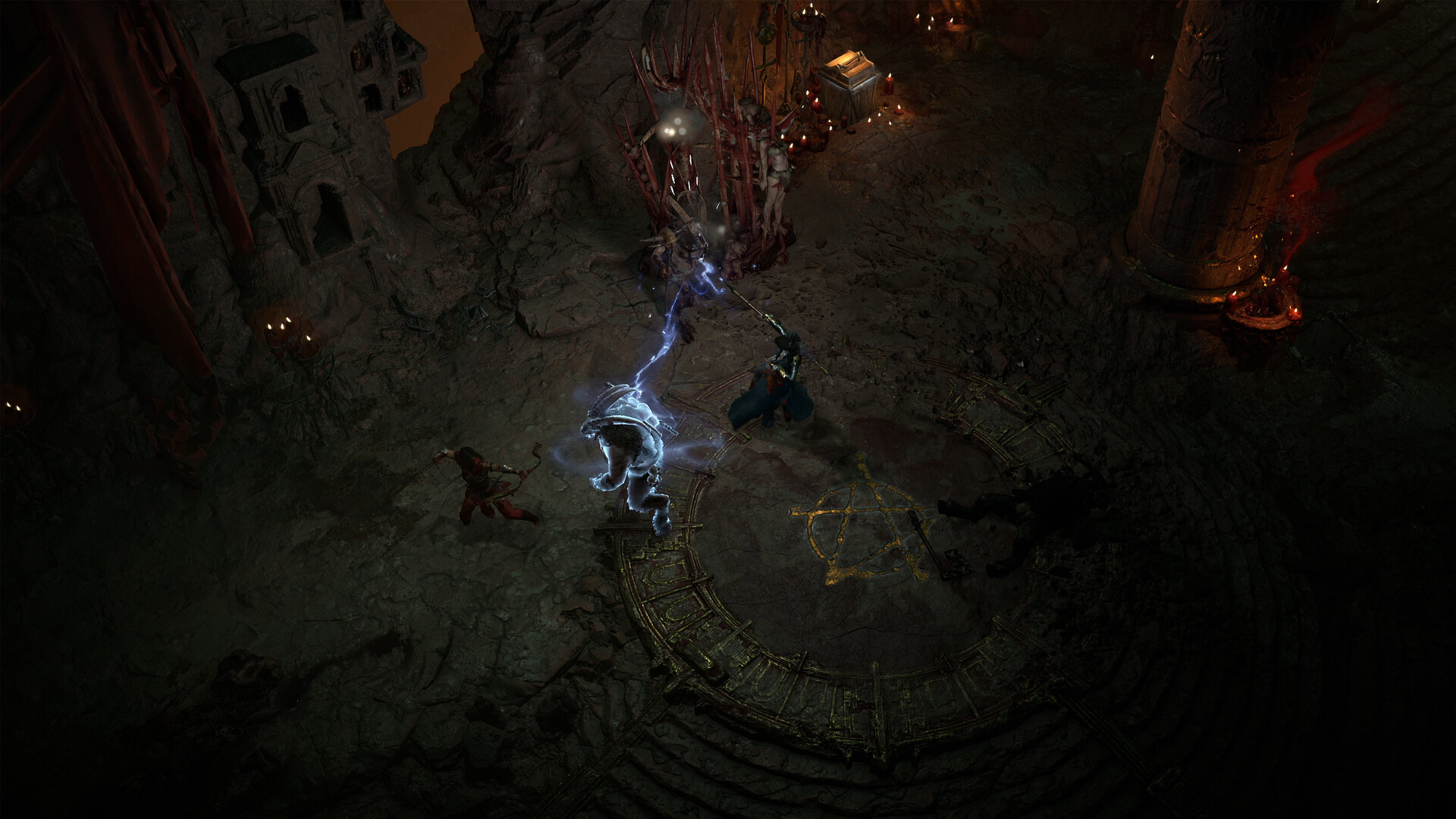
That said, War Plans lacks the specialization depth of Path of Exile 2's atlas system. Modifiers are a welcome addition, but they are rotational rather than specialized, and they do not allow players to craft a deeply personalized endgame experience the way POE veterans have come to expect. A committed Diablo 4 player will still spend dozens of hours on the same loop with small variations, and War Plans does not fundamentally change that reality. It is a competent layer, not a revolution.
The new Torment 12 difficulty tier deserves mention. This is the most brutal content Diablo 4 has offered, with elite packs in Torment 12 hitting harder than any bosses in the previous difficulty tier. The difficulty curve is finally long enough to absorb the top one or two percent of players who blew through previous tiers in the first week. Paragon boards have been expanded with Torment 12-exclusive glyphs, and the stat breakpoints for survival at the highest tier make build optimization feel meaningful in ways the earlier tiers never quite did.
Loot Filters and Quality of Life
Loot filters. Finally. After years of community requests and half-measures, Diablo 4 has a proper loot filter system that lets you set rules for which items appear on the ground, which pop up with alerts, and which get automatically flagged for scrapping. The system is deeper than a simple rarity filter — you can filter by affix, by item level, by build relevance — and it is the single most-requested quality-of-life feature the community has ever asked for.
The filter system is not as deep as Path of Exile's custom filter scripting, but it is meaningfully more usable for casual players while still allowing serious builds to set their preferences in detail. Endgame sessions where the screen used to be carpeted with drops now feel surgical. You loot what matters, ignore what does not, and the pace of combat no longer grinds to a halt every time an elite pack dies.
The map overlay has also finally been added — a transparent minimap that displays over gameplay rather than requiring a tab press. Automated pathfinding lets you click a distant objective and watch your character walk there while you make a sandwich. These are small things, but they are the small things that have been missing for years.
The fishing addition is, by every reviewer's admission, a strange outlier. Fishing in Diablo 4 is implemented through the emote menu rather than as a proper activity, and it produces only cosmetic rewards and a small amount of crafting material. It is neither a deep enough system to be a legitimate feature nor a shallow enough one to be a throwaway easter egg. The community has already begun joking about its inclusion, and Blizzard has indicated a more robust fishing pass is coming in a future update. For now, it is the one odd note in an otherwise focused package.
Technical Performance
Lord of Hatred ships in remarkably polished shape. I spent thirty-plus hours across PC and PS5 Pro during the review period and encountered fewer than five crashes, no progression blockers, and only a handful of minor graphical glitches (mostly lighting flickers in specific Skovos dungeon transitions). For a Blizzard expansion launch, this is extraordinary — a far cry from Vessel of Hatred's launch week, which was marred by server instability and progression bugs that required multiple hotfixes.
The PC version runs well across a broad range of hardware. My RTX 4070 Ti paired with a Ryzen 7 7800X3D delivered a steady 120fps at 1440p ultra with ray-traced shadows, and scaling down to mid-range hardware (an RTX 3060 test rig) held 60fps at 1440p medium without any major compromises. Loading times are near-instant on NVMe storage, and the procedural population of Skovos zones feels seamless in a way the base game's loading seams sometimes did not.
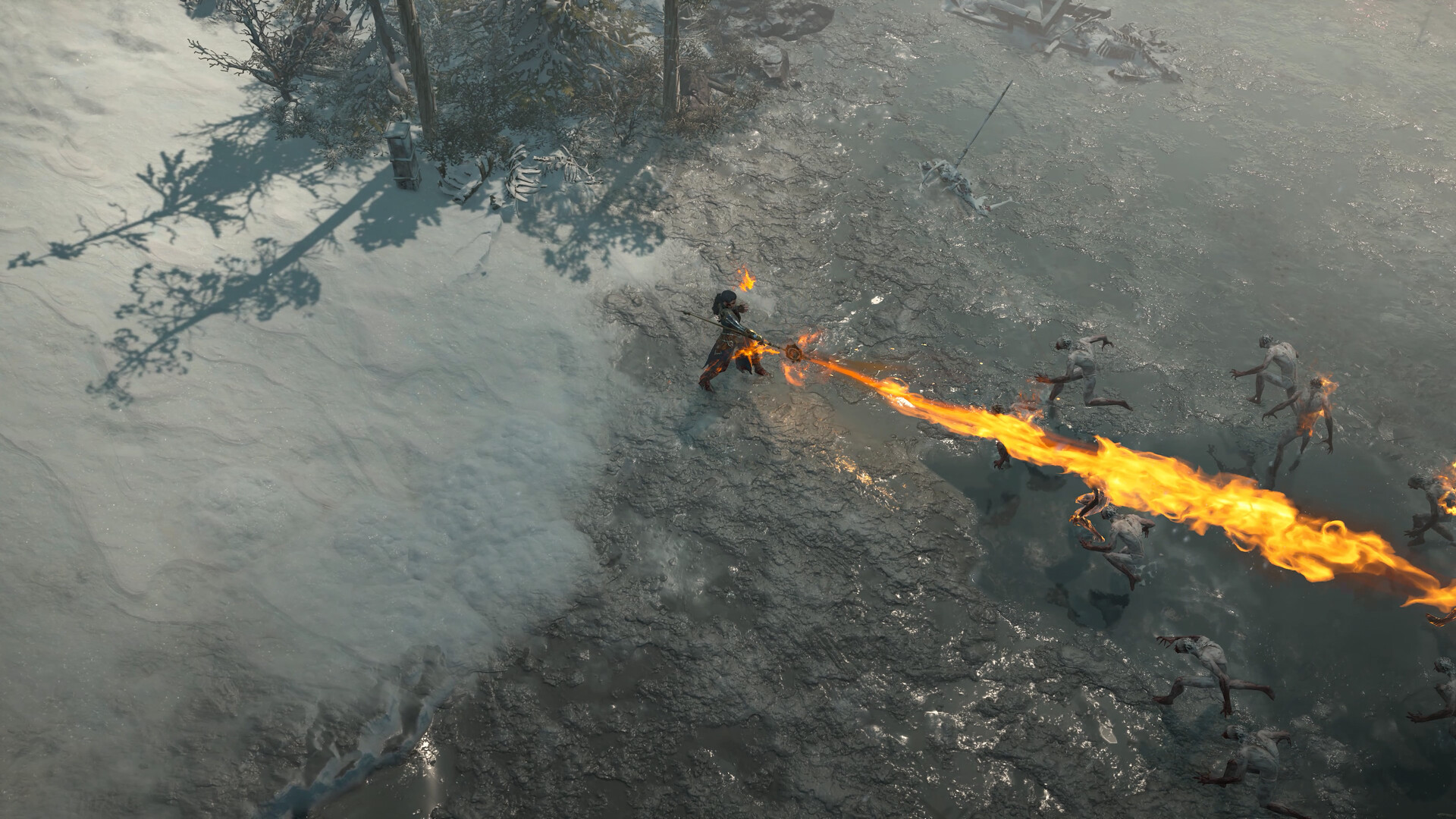
On PS5 Pro, performance mode delivers a locked 60fps at dynamic 4K, and the quality mode pushes 30fps at native 4K with additional ray-traced effects. I spent most of my console time in performance mode, and the response latency is tight enough that even late-game Echoing Hatred runs feel crisp. DualSense haptics are used thoughtfully — the Warlock's pacts produce distinct controller rumbles based on which demon is bound, and Paladin aura activations have a subtle vibration that communicates their on/off state without requiring a visual check. These are small touches, but they show the kind of attention to detail that tends to pay off over a long playtime.
The Xbox Series X version is similarly solid. Series S owners will be locked to 60fps at 1080p performance mode or 30fps at 4K quality mode, which is the expected compromise for the smaller console. I did not encounter any platform-specific bugs during testing, though the community will be a better judge of long-term stability than a review window allows.
The Verdict
Lord of Hatred is the expansion Diablo 4 has needed. It fixes the skill tree, brings back the Horadric Cube, adds two classes that justify their existence in very different ways, and ships a campaign that actually lands emotionally. The endgame layer is a competent improvement rather than a revolution, and the fishing feature is a head-scratcher, but those are small asterisks on a fundamentally strong package.
The more interesting question is what comes next. Mephisto's arc is closed. The Prime Evils have all been addressed in some form. Blizzard has indicated that the Diablo 4 live service will continue with seasons and smaller content drops, but the shape of the next expansion — or the next Diablo — is now an open question. Lord of Hatred feels like a genuine ending in a way few live-service games ever manage, and that is a compliment.
For lapsed players who bounced off the base game or drifted away after Vessel of Hatred, this is the right moment to return. The skill tree rework alone makes the base game significantly more enjoyable, and the full Lord of Hatred package gives you a meaty new region and campaign to chase. For committed veterans, this is the capstone the campaign promised. And for newcomers looking for an entry point into Blizzard's action RPG, the base game plus Lord of Hatred is currently the most complete, polished version of Diablo the company has ever shipped.
There has never been a better time to play Diablo 4.