
God of War Ragnarok carries on its shoulders the weight of one of gaming's most beloved reboots, and it bears that burden with the same quiet strength as its protagonist. Santa Monica Studio has crafted a sequel that does not merely iterate on the 2018 original but expands it in every meaningful direction, delivering a narrative conclusion to the Norse saga that is by turns thrilling, heartbreaking, and profoundly human. This is the rare sequel that understands what made its predecessor great and has the confidence to push even further.
The relationship between Kratos and Atreus remains the emotional spine of the entire experience. What began as a story about a distant father learning to connect with his son has evolved into something far more complex. Atreus is no longer a child following in his father's footsteps; he is a young man struggling to define his own identity, and the tension between his desire for independence and Kratos's instinct to protect creates dramatic friction that fuels the entire narrative. Christopher Judge's performance as Kratos is nothing short of extraordinary, conveying volumes of emotion through restrained delivery that makes every moment of vulnerability feel earned.
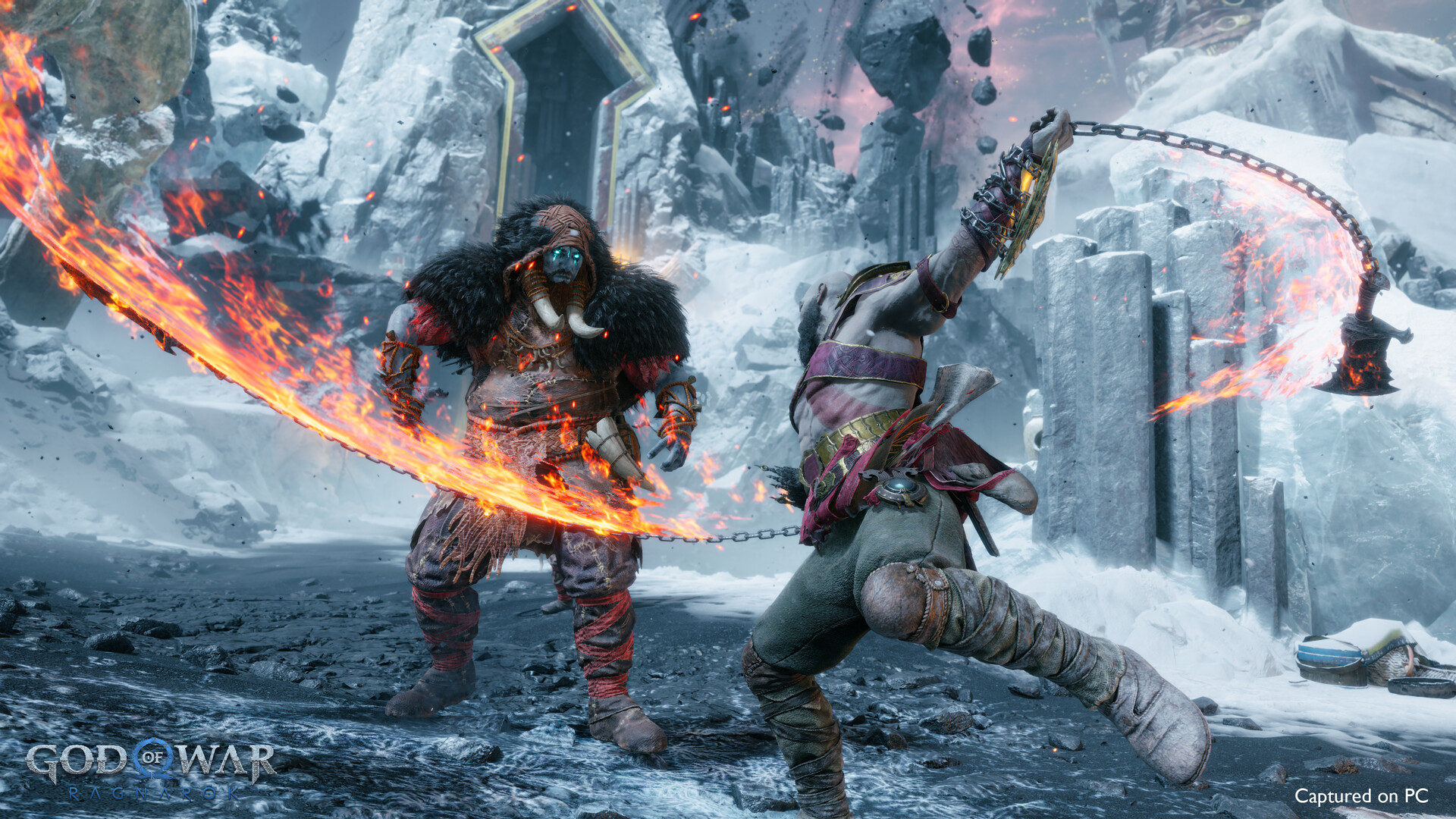
Combat has been overhauled with the kind of depth that transforms an already excellent system into something truly exceptional. The Leviathan Axe and Blades of Chaos return with expanded movesets and new runic abilities, but the addition of new weapons and combat mechanics ensures that encounters never feel stale across the thirty-hour campaign. Enemy variety has increased dramatically, with each realm introducing foes that demand different tactical approaches. The Berserker optional bosses are particularly outstanding, offering challenges that rival the best encounters in the Souls genre.
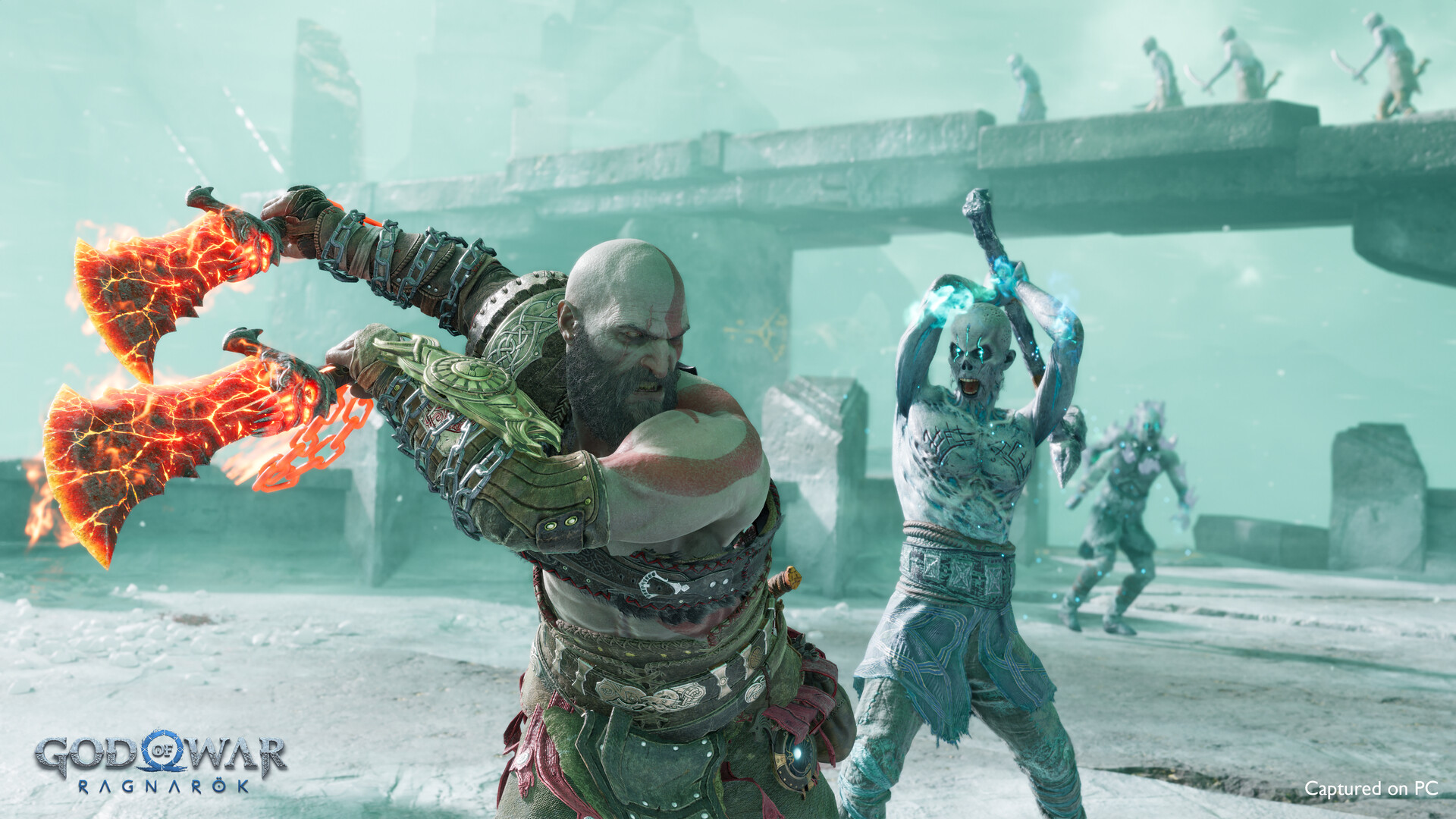
The scope of the world has expanded enormously. All nine realms of Norse mythology are now explorable, each with its own distinct visual identity, environmental puzzles, and side content. Svartalfheim's dwarven mines pulse with industrial energy, Vanaheim's jungles teem with life and mystery, and the desolate beauty of Niflheim has been completely reimagined. The art direction across these realms is consistently breathtaking, with lighting and environmental detail that push the PlayStation hardware to its limits and translate beautifully to the PC version.
The supporting cast deserves enormous credit for elevating the story beyond a simple father-son tale. Freya's arc from antagonist to reluctant ally is handled with remarkable nuance. Thor, voiced with menacing charm by Ryan Hurst, subverts expectations as a complex figure rather than a one-dimensional villain. And Odin, brought to life by Richard Schiff with unsettling charisma, is one of gaming's most memorable antagonists precisely because he is so disarmingly reasonable. Every major character feels fully realized, with motivations that extend beyond their narrative function.
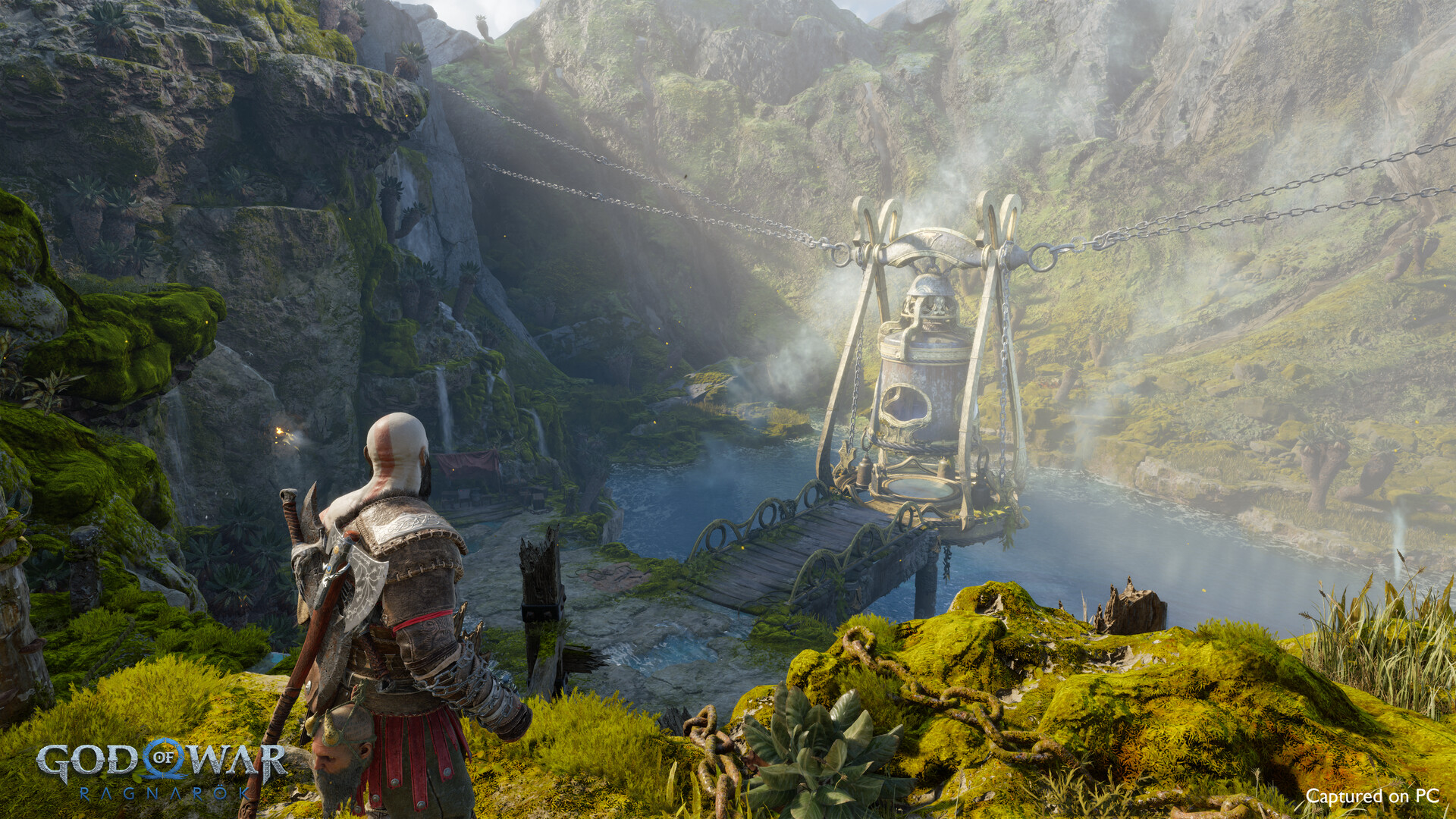
The game's puzzle design is clever and varied, incorporating the elemental properties of your weapons in increasingly creative ways. Freezing mechanisms with the Leviathan Axe, igniting bramble with the Blades of Chaos, and manipulating sigils to create chain reactions all feel satisfying. However, the sheer frequency of puzzles can occasionally break the momentum of the narrative, particularly during sequences where the story demands urgency. The companion AI also has an unfortunate tendency to blurt out puzzle solutions before you have had adequate time to work them out yourself, which diminishes the satisfaction of discovery.
Visually, Ragnarok is a showcase of technical and artistic achievement. Character models are stunningly detailed, facial animations convey emotion with cinematic precision, and the environmental art ranges from intimate cave interiors to sweeping vistas that stretch to the horizon. The single-shot camera technique returns, maintaining the unbroken perspective that made the 2018 game feel so immersive. On PC with unlocked framerates and higher resolutions, the game reaches a level of visual fidelity that rivals anything on the market.
The soundtrack by Bear McCreary is a masterwork of orchestral and choral composition. The themes for each realm are instantly recognizable, and the way the music shifts dynamically between exploration, combat, and cinematic moments demonstrates a level of integration that few games achieve. Key story moments are elevated by musical cues that hit with devastating emotional precision, and the final act features compositions that will linger in your memory long after the credits roll.
God of War Ragnarok is a magnificent conclusion to the Norse saga and a testament to what narrative-driven action games can achieve. It takes the foundation of an already outstanding game and builds upon it with ambition, heart, and technical mastery. While its pacing occasionally stumbles and its companion AI could use refinement, these are minor blemishes on an otherwise extraordinary experience. Kratos's journey from rage to restraint, from isolation to love, is one of gaming's great character arcs, and Ragnarok brings it to a close with the grace it deserves.