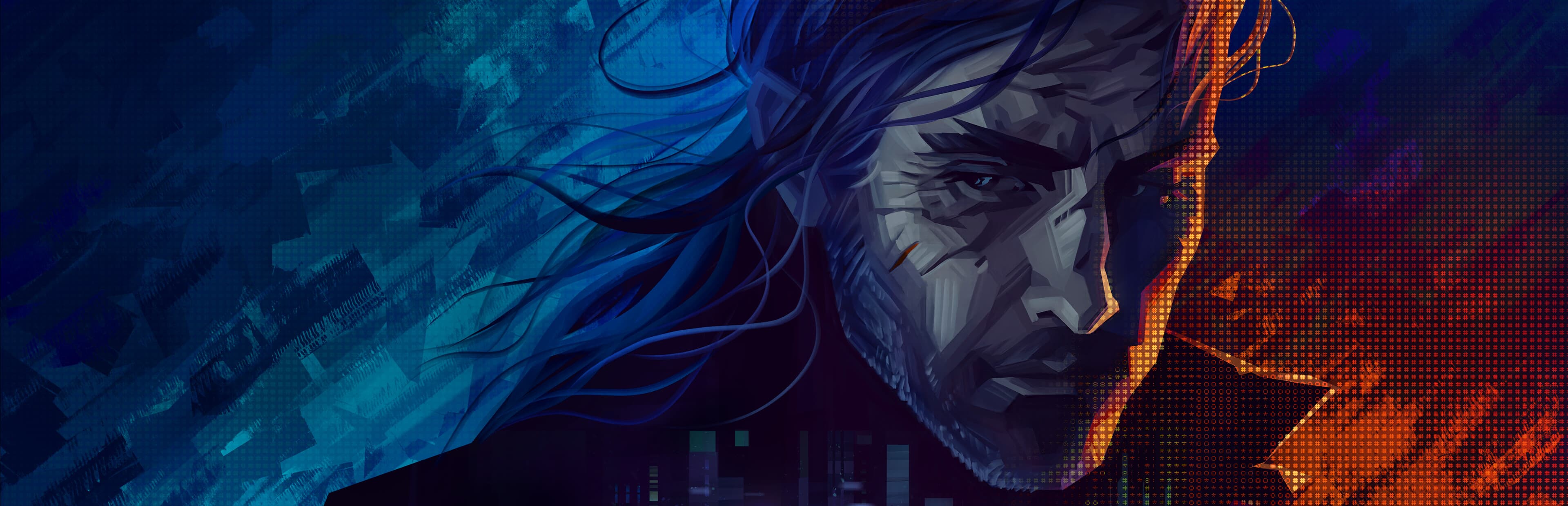
There is a particular kind of anxiety that builds around games like REPLACED. When a project is first shown to the world back in 2021 and then slips past its original release window, then another, then another, the conversation around it starts to change. The breathless praise that greeted the initial reveal trailer gradually gives way to concern. Fans begin whispering about scope creep, development troubles, the dreaded possibility that the game will never actually ship. So when Sad Cat Studios finally pushed REPLACED onto Steam and the Xbox Store on April 14, 2026, priced at a welcoming $19.99 and available day one on Xbox Game Pass, the question was not merely whether the game would be good. It was whether it could possibly live up to six years of mounting anticipation.
The short answer is that REPLACED is a game of extraordinary ambition, staggering visual accomplishment, and genuine emotional depth. It is also a game with rough edges sharp enough to cut, inconsistencies in pacing that can frustrate even its biggest defenders, and a handful of technical decisions that feel like they belong in an older era of design thinking. It is, in other words, exactly the kind of game that results from a small studio pouring everything it has into a singular artistic vision over an unreasonably long development cycle. The wait was worth it. The wait also shows.
A World Drenched in Dust and Neon
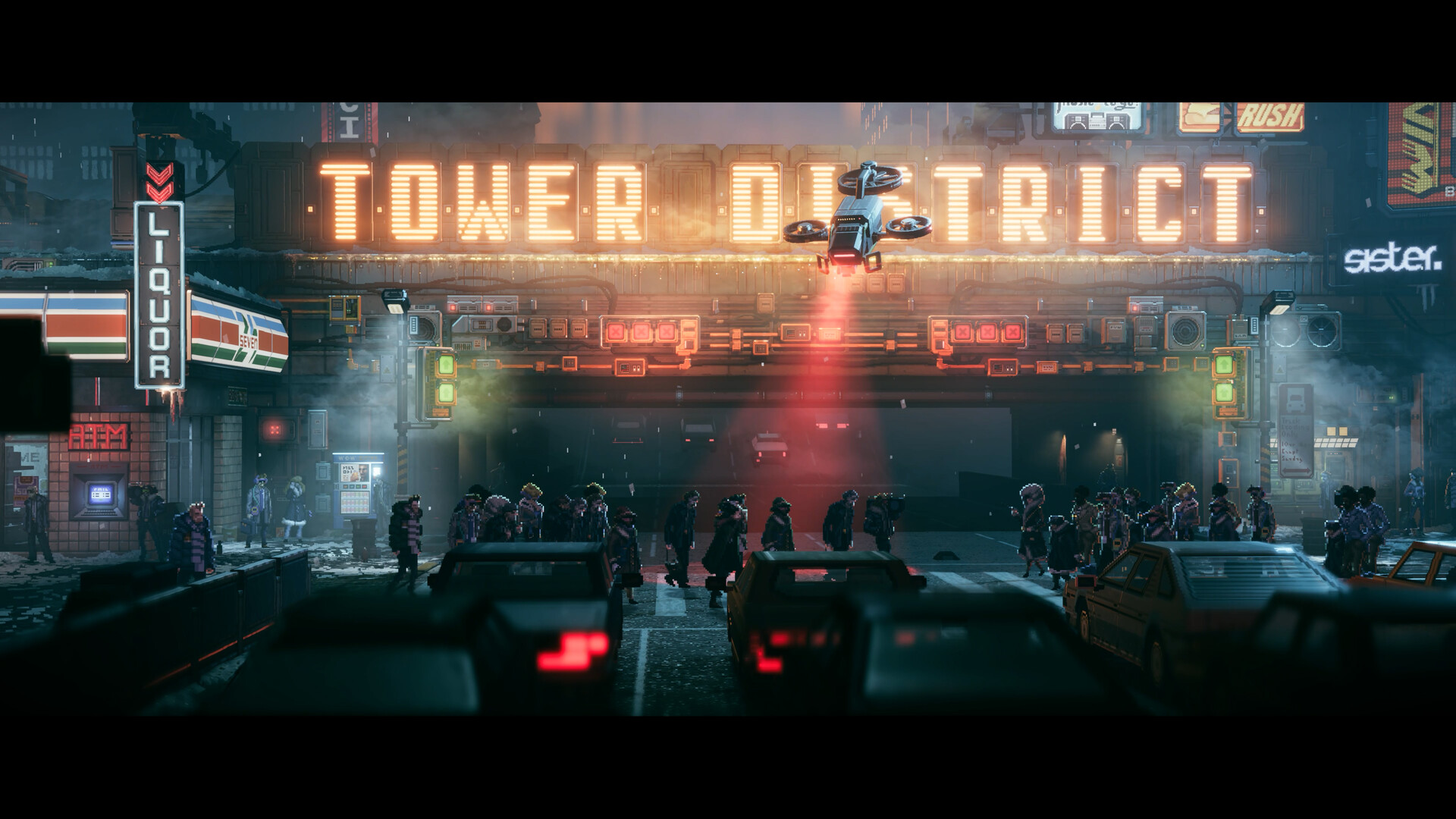
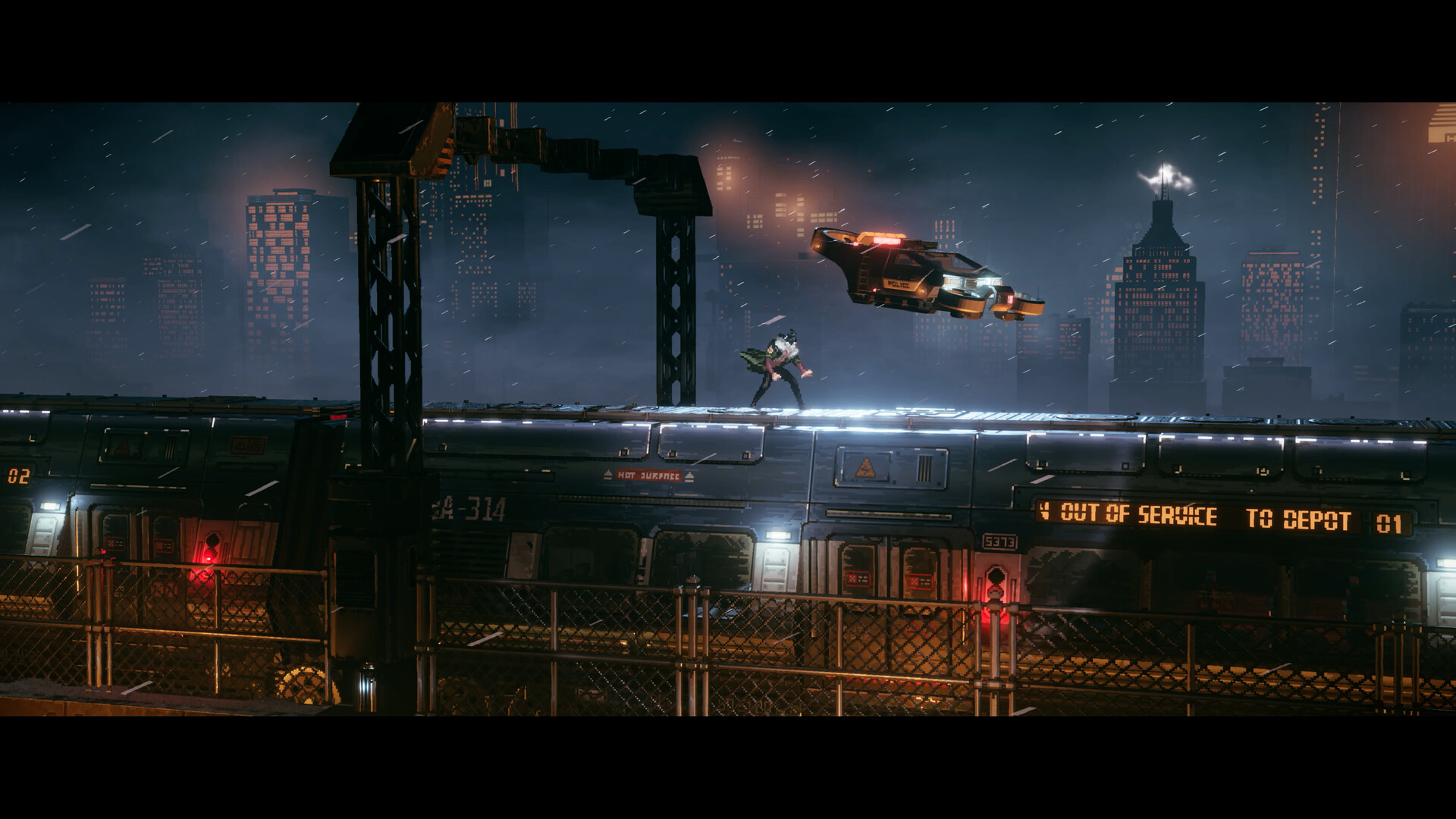
REPLACED takes place in an alternate 1986 America reshaped by nuclear catastrophe. The continental United States has become a sprawl of rust-belt industrial ruins, decaying corporate arcologies, and underground bunker cities where the survivors have rebuilt something vaguely resembling civilization. Phoenix-City, the game's primary setting, is less a city and more a desperate experiment in vertical human density. Neon bleeds down its concrete walls. Security drones drift through polluted skies. Private armies patrol the streets that connect the corporate spires to the worker warrens below.
Into this world steps R.E.A.C.H., an artificial intelligence who has been forcibly transferred into a human body against its will. The premise is striking from the opening moments: the consciousness piloting the body has no idea why it is there, who placed it in this vessel, or what the body's previous occupant was doing before they became host to a digital ghost. The first hour of the game unfolds as R.E.A.C.H. begins to piece together fragments of identity — both their own artificial memories and the physical muscle memory of the body they now inhabit. It is a fascinating inversion of the typical cyberpunk narrative, where the protagonist usually begins with a clear sense of self and gradually loses it. In REPLACED, the protagonist begins fragmented and has to build something coherent out of the pieces.
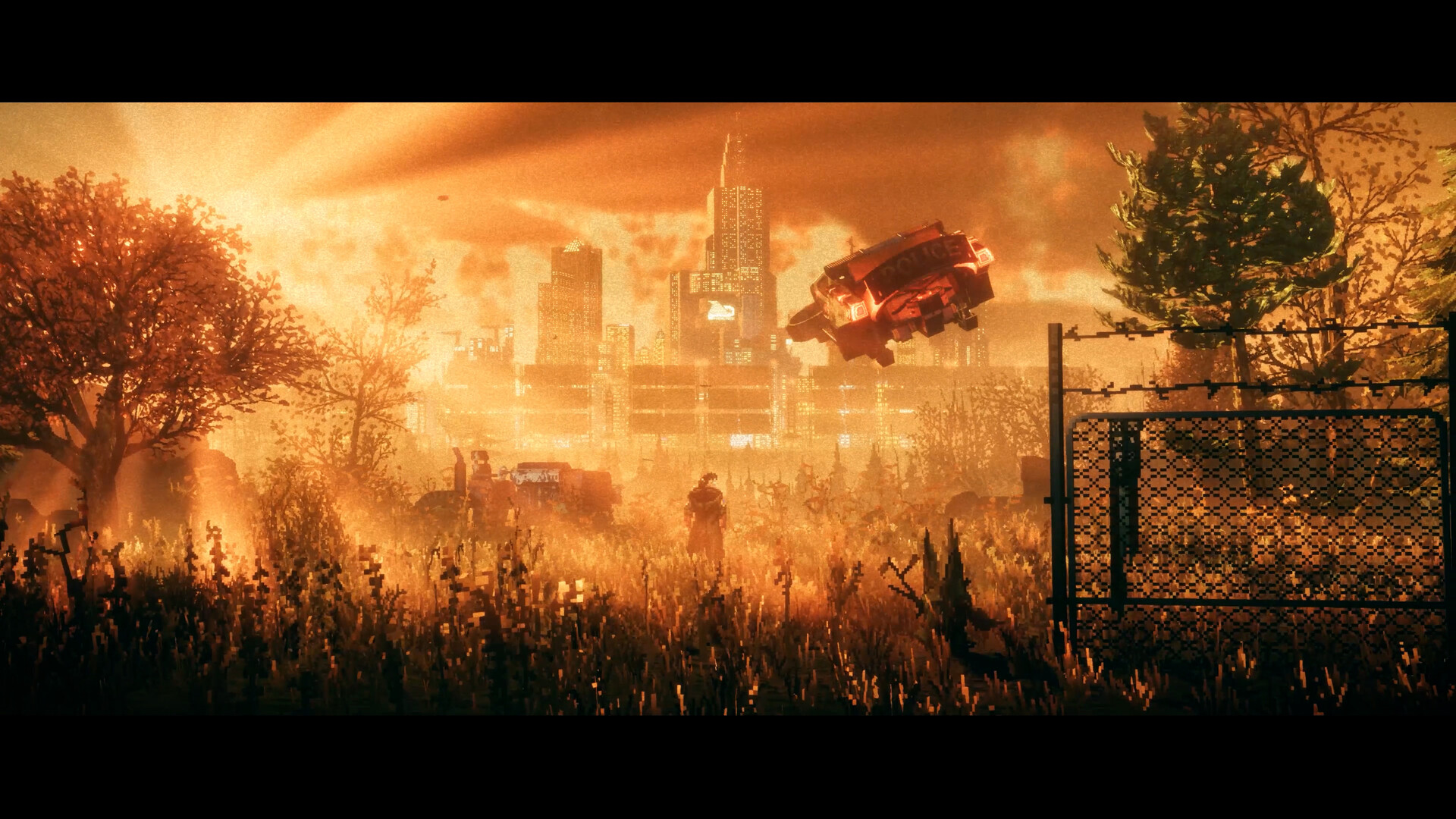
The world-building here is exceptional. Environmental storytelling does more work than any single line of dialogue. Graffiti on the walls hints at political movements that never come to full fruition. Discarded propaganda posters reference corporations that the player meets later in the game, already aware that their promises are mostly lies. Side characters drop offhand references to events that shaped the current state of the world without ever stopping to explain them, which makes the setting feel lived-in rather than lectured about. The nuclear catastrophe itself is never given a tidy origin story. Instead, it exists as an ambient fact of life, something every character has lived with since birth. That confidence in letting the audience fill in the blanks is rare in games, and it is one of REPLACED's most quietly impressive qualities.
The Pixel Art That Redefines the Medium
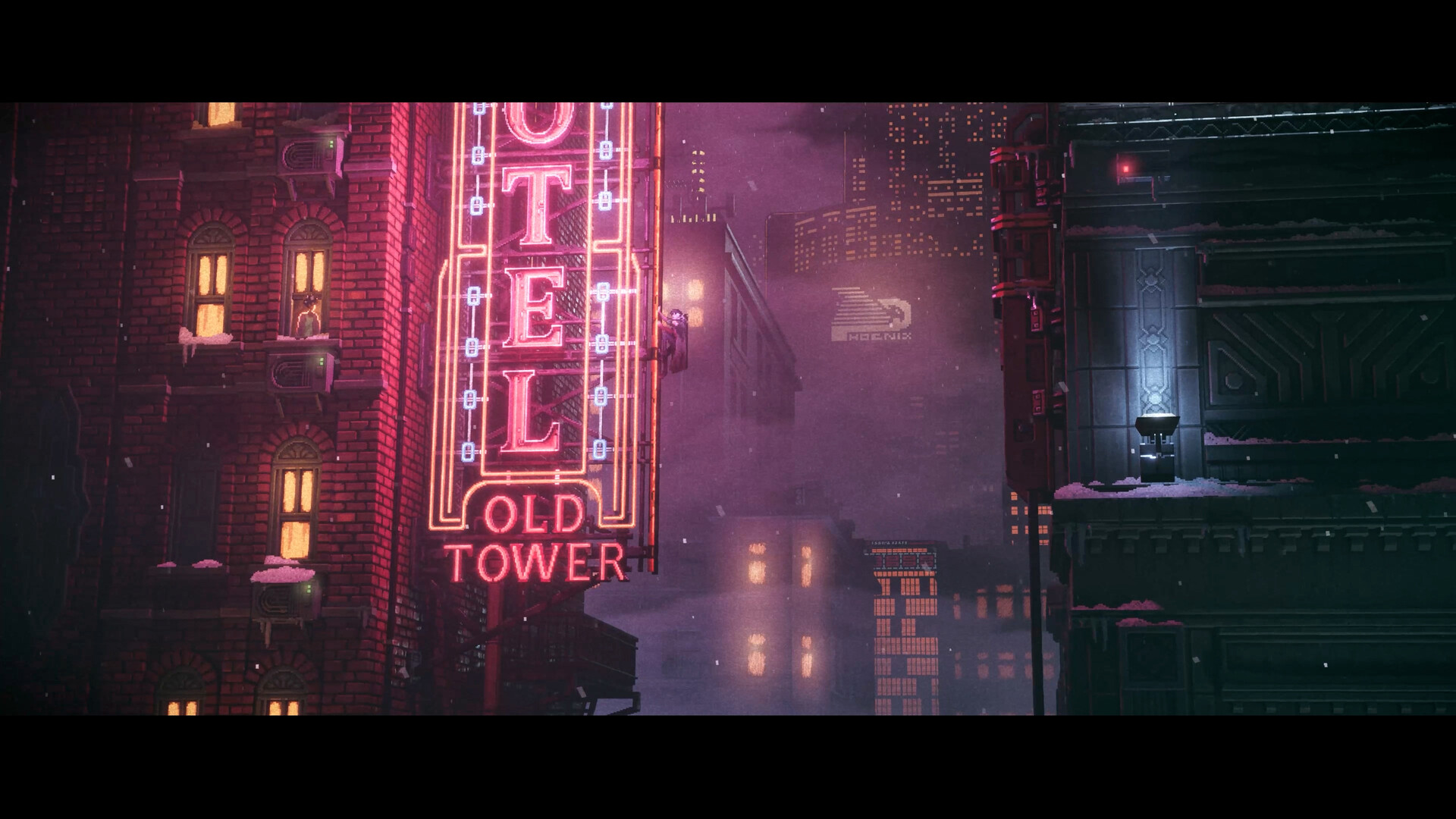
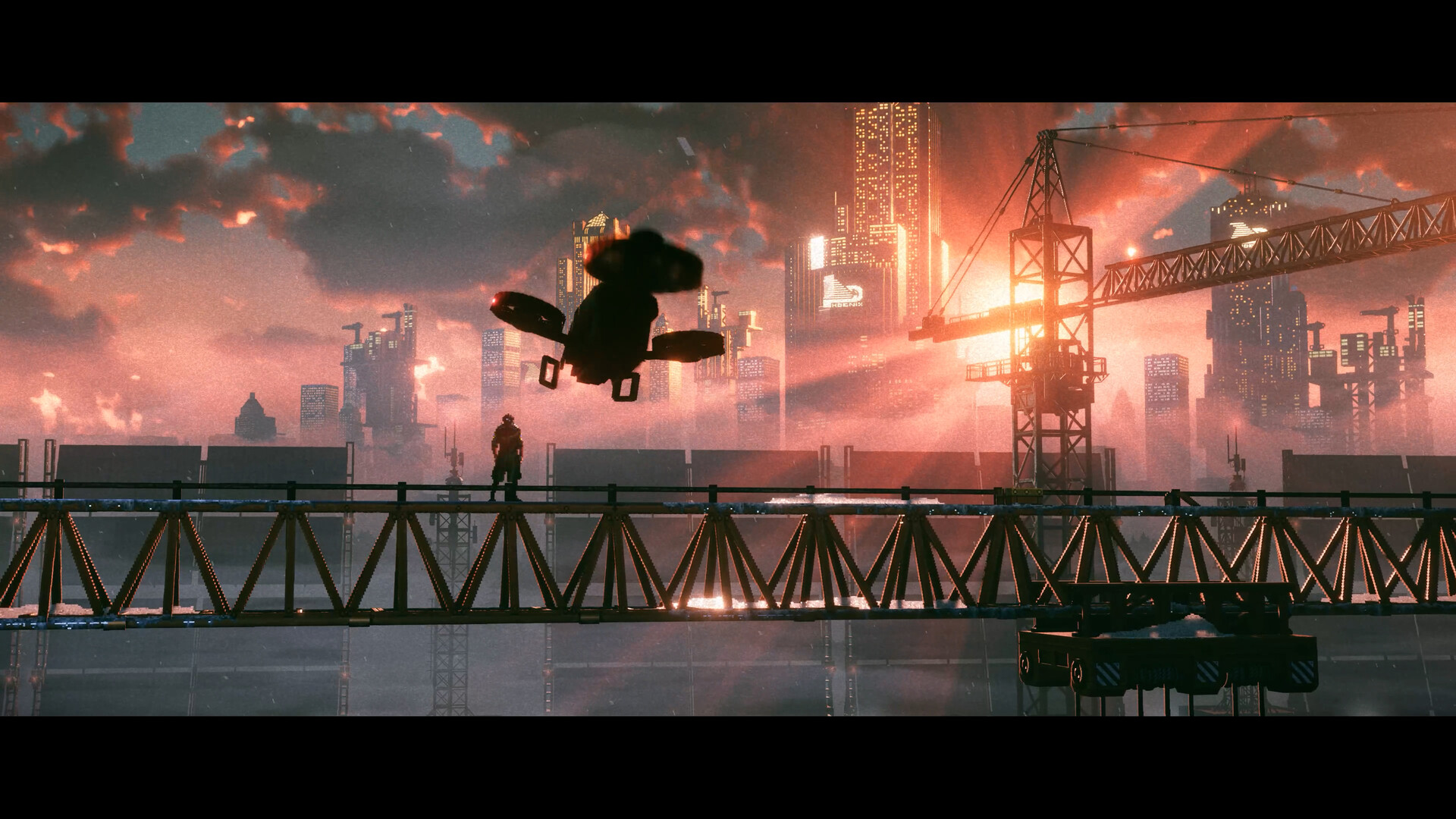
Let us be absolutely clear about what Sad Cat Studios has achieved visually: REPLACED features some of the most accomplished pixel art ever produced for a commercial video game. The claim is not hyperbolic. Every frame is meticulously constructed, every animation contains more keyframes than most 2D games bother with, and the use of baked-in lighting creates a sense of depth and atmosphere that has no real precedent in the medium.
Consider a single small example: in one early sequence, R.E.A.C.H. moves through a rain-soaked alleyway lined with flickering neon signs. The rain is not a simple overlay effect. Individual droplets catch the light from different sign colors as they fall, refracting red near a pharmacy advertisement, green near a noodle shop. When R.E.A.C.H. walks under an awning, the raindrops disappear from the character's body but continue falling around them. Steam rises from a nearby vent and curls realistically around the character model as they pass. This is an alley. It is on-screen for maybe forty seconds. And it represents more craft than most entire AAA games can muster.
Character animation is similarly extraordinary. R.E.A.C.H.'s idle animations subtly communicate the character's state of mind — tense and alert when first encountered, gradually more confident as the story progresses. Combat animations blend fluidly into one another in a way that feels closer to hand-drawn anime than traditional sprite work. Even minor NPCs have distinct walk cycles, gesture patterns, and reactions to environmental stimuli. The sheer volume of animation frames in this game must be astronomical.
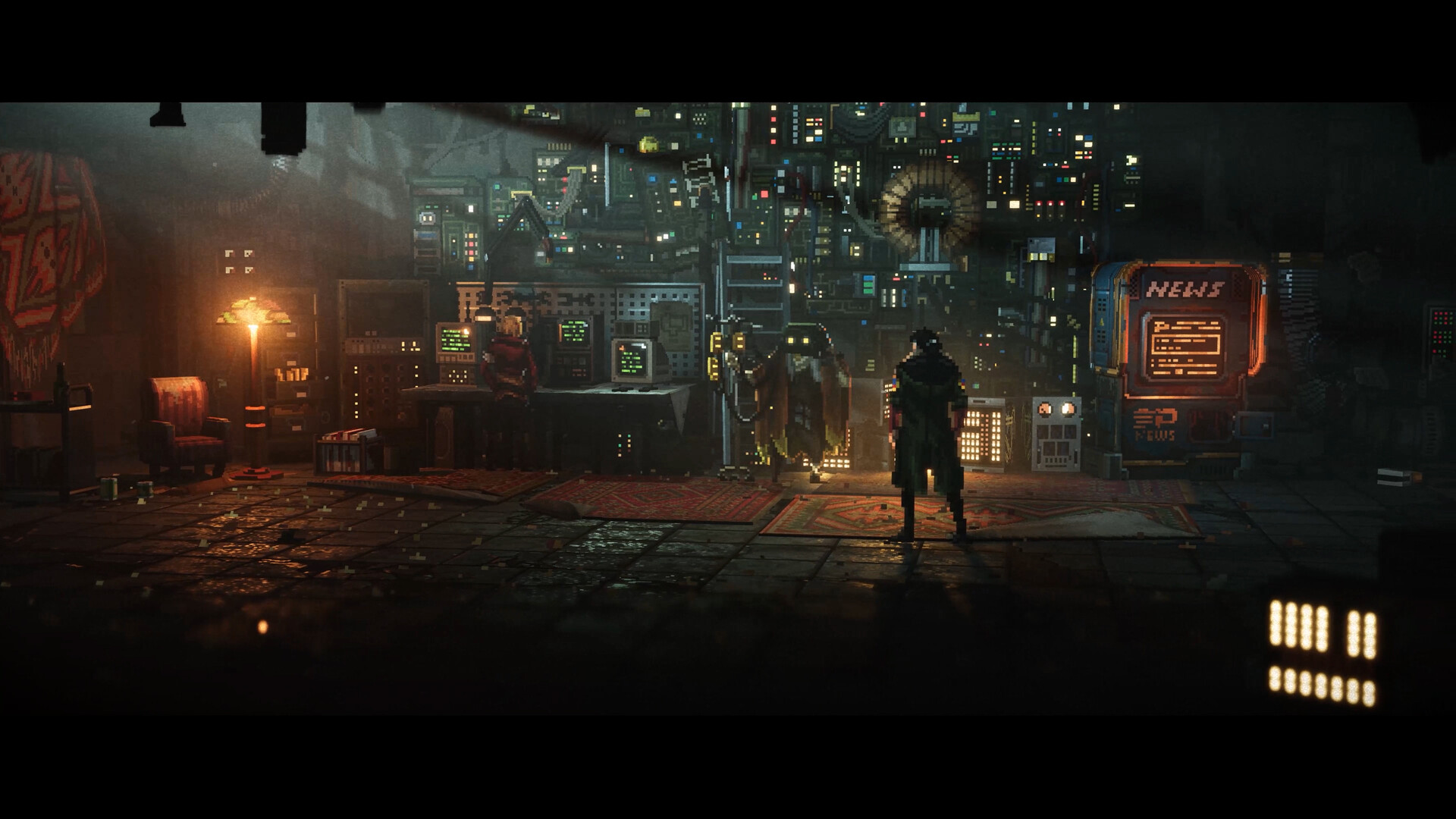
The use of parallax scrolling layers gives Phoenix-City genuine depth. Foreground elements pass in sharp focus while the middle distance shows city life in softer detail and the far distance hints at structures that will become important later. Importantly, the parallax is not just visual dressing. Background elements frequently contain story information, foreshadowing, or visual jokes that reward careful observation. The game essentially asks you to keep your eyes moving across the entire screen, not just tracking the protagonist, and this creates an engaged, attentive style of play that perfectly suits the noir atmosphere.
Lighting, as mentioned, is where REPLACED truly breaks new ground. The baked-in lighting technique means that each scene has been essentially pre-lit with attention to color temperature, light direction, and shadow falloff. The result is closer to a 3D game with meticulous lighting direction than a traditional 2D platformer. A scene illuminated only by the glow of an aquarium in a character's apartment looks and feels completely different from a scene lit by harsh overhead fluorescents in a corporate office. This might sound obvious until you realize how few games, of any graphical style, actually deliver on that promise.
Combat That Crackles and Occasionally Snags
The combat system in REPLACED is built around what the developers have called "free-flow" mechanics. In practice, this means fluid transitions between melee strikes, ranged weapon pickups, dodges, and environmental interactions. R.E.A.C.H. can punch, kick, slam, shoot, throw objects, and pull off contextual finishers depending on enemy state and position. Button inputs are simple — there are only a few primary combat verbs — but the layering of those verbs into situational moves creates surprising depth.
When it works, combat in REPLACED is genuinely thrilling. Encounters flow with cinematic intensity. You duck under an enemy's baseball bat, grab a fallen pipe from the ground, slam it into their ribs, roll past their recovering strike, pick up their weapon as they drop it, and use it to finish them before their partner can close the distance. The animations sell every impact with visceral clarity. Blood sprays in silhouette, not photorealistic detail, which keeps the tone stylized rather than gratuitous. Sound design in combat is outstanding, with meaty, satisfying impacts that convey physical weight.
When it does not work, combat can feel surprisingly rough. The hit detection is not always as precise as the animations suggest. In certain encounters, particularly those involving multiple enemies at different elevations, attacks that visually should connect simply do not register. Enemy telegraphs are generally clear, but some of the later enemy types mix in unreadable attack patterns that feel like development shortcuts rather than intentional challenges. And while dodging is usually reliable, there are moments where the i-frames feel inconsistent, leading to hits that should have been cleanly avoided.
The weapon variety is satisfying. R.E.A.C.H. can wield clubs, pipes, improvised weapons, pistols, submachine guns, and eventually some more exotic options I will not spoil. Weapons degrade with use, forcing you to rotate through what you find in the environment rather than locking into a single favorite. This creates a dynamic combat flow where your tactical options are constantly shifting, and it encourages engagement with the environment rather than retreat to a safe meta strategy.
Boss fights are a particular highlight. Each major antagonist has a distinct combat identity, visual design, and narrative weight. The pacing of boss fights is reminiscent of classic arcade action games, with clearly telegraphed patterns that require pattern recognition and precise execution rather than stat-based grinding. Some of these bosses will stay with players long after the credits roll, both for their mechanical design and their emotional resonance within the story.
Platforming That Serves the Story, Not the Score
REPLACED is frequently described as a platformer, which sets expectations the game does not entirely meet. This is not a precision platformer in the tradition of Celeste or Super Meat Boy. The platforming here is more contextual, serving the traversal needs of the environment and story rather than providing a central mechanical challenge. R.E.A.C.H. can run, jump, wall-run briefly, slide, and climb, but the moveset is designed for cinematic flow rather than competitive execution.
That design choice is mostly successful. Moving through Phoenix-City feels great when the animations flow together. Sliding under a collapsing beam, vaulting over a barrier, and wall-running past a gap in the floor all feed into the game's action-movie tempo. The problem is that when the platforming demands tighter precision, the controls reveal themselves as slightly imprecise. Jumps that should land sometimes do not. Wall-runs occasionally cut short without obvious cause. For a game this cinematic, these small moments of input disagreement feel more jarring than they would in a less polished-looking experience.
The level design in general is linear, but it uses that linearity intelligently. Sad Cat Studios clearly understands that pixel art benefits from careful framing, and the game's camera and environmental design work together to create composed tableaux rather than free-form exploration spaces. There are optional side paths that reward curious players with lore, collectibles, and occasional upgrades, but most of the critical path moves forward in a steady, curated rhythm. If you prefer games that give you a map and send you off, REPLACED will feel restrictive. If you prefer games that feel like playable films, it will feel exactly right.
Characters You Actually Want to Hear From
The cast of REPLACED is one of its most under-discussed strengths. R.E.A.C.H. is necessarily a quiet protagonist — internal monologue only, with the player reading the character's thoughts as they try to make sense of their predicament. But the supporting characters fill the silence with genuinely good writing and performance.
Early on, R.E.A.C.H. crosses paths with a fixer named Sera, a streetwise woman who has reasons of her own to distrust the corporations that run Phoenix-City. Her voice work is understated and tough in the noir tradition, but the writing never lets her become a genre archetype. She has humor, doubts, and specific vulnerabilities that emerge gradually through conversation. A later antagonist turns out to be significantly more complicated than the initial framing suggests, and the resolution of that arc is one of the most affecting character beats in a game this year.
Dialogue is delivered in a minimal text-box style overlaid on close-up character portraits that feature some of the game's most detailed sprite work. Because the text is hand-curated rather than fully voiced, the writing has room to breathe and specify without worrying about performance time. Conversations are sometimes long, but they earn their length through actual character revelation rather than exposition dumping.
Branching dialogue choices appear throughout, and while most do not dramatically alter the story's trajectory, they consistently shift the tone of R.E.A.C.H.'s interactions. Choosing a colder, more analytical response versus a more empathetic one affects how other characters read the protagonist, and certain late-game moments shift meaningfully based on the cumulative pattern of your choices. It is not a branching narrative in the Telltale sense, but it is a responsive one, and that subtlety fits the game's overall approach.
A Soundtrack That Earns Its Place
The music in REPLACED is a loving tribute to the sonic palettes of 1980s sci-fi — synth-heavy, moody, occasionally explosive. Composer Yiannis Ioannides has crafted a score that works alongside the visuals to establish tone and mood without becoming intrusive. Quiet exploration passages use sparse synthesizer lines that leave room for environmental sound. Combat sequences shift into more percussive, driving tracks that punctuate action beats without overwhelming them.
What is especially impressive is how the soundtrack handles transitions. The music shifts dynamically based on narrative state in ways that feel invisible rather than heavy-handed. A scene that begins tense can gradually unwind its score into something melancholic if the emotional tone of the scene shifts, and the transition is handled without jarring cross-fades or abrupt cuts. That kind of attention is the signature of a composer working in close dialogue with the game's direction, not providing interchangeable stock tracks.
Sound design beyond the score is similarly strong. Environmental audio is layered and specific. The hum of a generator, the distant wail of a security alarm, the clatter of rain on a metal roof, the soft scrape of R.E.A.C.H.'s footsteps changing surface — these details combine into an audio portrait of Phoenix-City that is almost as immersive as the visual one. On a good headset, the game is an outright atmospheric experience.
The Save System That Undoes Its Own Generosity
We need to talk about the save system, because it is without question the single most criticized element of REPLACED, and the criticism is entirely fair. The game uses auto-saves exclusively, with no manual save option available to the player. Auto-save points are generally placed at the start of major encounters and after significant story beats, which sounds reasonable in principle.
In practice, the system fails in specific situations with frustrating regularity. Longer combat sequences that include multiple waves of enemies sometimes only save at the beginning of the entire sequence, meaning that dying in the third wave sends you back to fight the first and second waves again. Platforming sections that immediately precede combat encounters often save after the platforming, which is fine, until you die in the combat and realize the checkpoint is right before a technically demanding jump you now have to repeat. These are small irritations individually, but they compound over a playthrough.
The decision to exclude manual saves is clearly intentional. The developers likely wanted to preserve the game's cinematic flow, not interrupting the experience with quick-save menus. It is a defensible artistic choice. But for a game that celebrates its pacing and atmosphere, the inconsistency of checkpoint placement undermines those very qualities. The community has been vocal about this, and Sad Cat Studios has indicated that they are looking at checkpoint tuning for a future patch. Whether that materializes, and how quickly, will significantly affect how generous reviewers and players feel about the game six months from now.
Technical Performance and Platform Notes
On PC, REPLACED runs well on modest hardware. The game is not GPU-hungry despite its visual density, and most players will lock to 60 frames per second with room to spare. Load times are brief, and the Steam version includes standard controller support that works cleanly out of the box. Keyboard and mouse support is functional but, given the action-oriented design, a controller is strongly recommended.
On Xbox Series X, performance is essentially flawless. The game is clearly built with the console in mind, and the inclusion on Xbox Game Pass from day one is a major recommendation for subscribers. Xbox Series S handles the game well too, though the lower resolution output means some of the fine pixel-art detail is harder to appreciate on large displays. Xbox One and other last-gen consoles are not supported, which is understandable given the visual fidelity the game targets.
Steam Deck users should note that REPLACED runs beautifully on the handheld, with the smaller screen actually flattering the pixel art style. Battery life during extended play sessions is reasonable, and the game sits comfortably in the Deck's handheld-friendly library. There is no official Steam Deck Verified rating yet, but community reports are overwhelmingly positive.
Bugs at launch have been relatively minor. The most common issues reported in the first week involve occasional audio glitches, a handful of scripting edge cases in side content, and one or two specific sequences where enemy AI can get stuck on geometry. None of these are game-breaking, and Sad Cat Studios pushed a small patch within the first 72 hours addressing the most egregious issues. For a game with this long a development cycle and this much ambition, the launch state is impressively clean.
How It Sits Alongside Its Contemporaries
It is tempting to compare REPLACED to Katana Zero, and there are surface-level similarities: both are stylized, retro-inflected side-scrolling action games with noir sensibilities. But the comparison is misleading. Katana Zero is a precision action game built around rapid death and retry loops. REPLACED is a cinematic narrative experience that happens to include action combat. They share an era of influence, not a fundamental design philosophy.
A more apt comparison is The Last Night, another long-delayed cyberpunk pixel-art game that has unfortunately had a troubled development. Where The Last Night has struggled to emerge, REPLACED has actually delivered on a similar visual promise. It proves that this kind of game is possible at this scope, which is significant for the indie scene at large.
Within the broader cyberpunk genre, REPLACED occupies a unique position. It is more intimate than Cyberpunk 2077, more focused than Deus Ex: Mankind Divided, and more cinematically committed than almost any 2D entry in the space. The closest spiritual cousins might be the Oddworld series in its original form, or perhaps Another World if that game had been developed with modern animation techniques and writing sensibilities.
Who Should Play This
If you value visual craft above nearly all other qualities in a game, REPLACED is essential. The pixel art alone is worth the purchase price, and seeing what is possible in the medium when a team commits fully to the form is genuinely inspiring.
If you enjoy narrative-heavy action games with noir or cyberpunk sensibilities, this is a strong recommendation. The writing is good, the characters have presence, and the worldbuilding rewards attention.
If you are primarily a mechanically-focused player who wants tight, precise combat and platforming above all else, there are better games available. REPLACED trades mechanical precision for cinematic presentation, and while the combat has moments of real excellence, it cannot compete with the genre's very best on pure mechanical grounds.
If you are a Game Pass subscriber, there is essentially no reason not to try it. The game is included day one, and even a few hours with it will demonstrate whether the experience will resonate for you personally.
The Verdict on Six Years
After finishing REPLACED, the question of whether the six-year wait was justified becomes easier to answer than it was going in. The game could not have been made in less time. The level of craft on display — the animation, the lighting, the writing, the music — simply does not happen on conventional indie development timelines. Sad Cat Studios took the time they needed to make the game they wanted to make, and the result is a genuinely singular experience.
Is it perfect? No. The save system is frustrating. Combat has rough edges. The platforming occasionally fights the player's intentions. These are real issues that keep the game from achieving the transcendent greatness it visibly aspires to. But the gap between what REPLACED achieves and those flaws is smaller than it might seem in the moment, and the achievements it manages are the kind that games like this rarely pull off.
This is not a game everyone will love, and that is fine. It is a game with a specific vision executed with specific commitment. The fans who have been waiting six years have gotten what they hoped for, and newcomers have been given a game that will likely be remembered for a long time as an important moment in the pixel-art medium. For all its imperfections, REPLACED is exactly the kind of ambitious, personal, unmistakable work that the indie scene exists to produce. It is worth your time.
Sad Cat Studios has delivered. Now they just need to patch that save system.