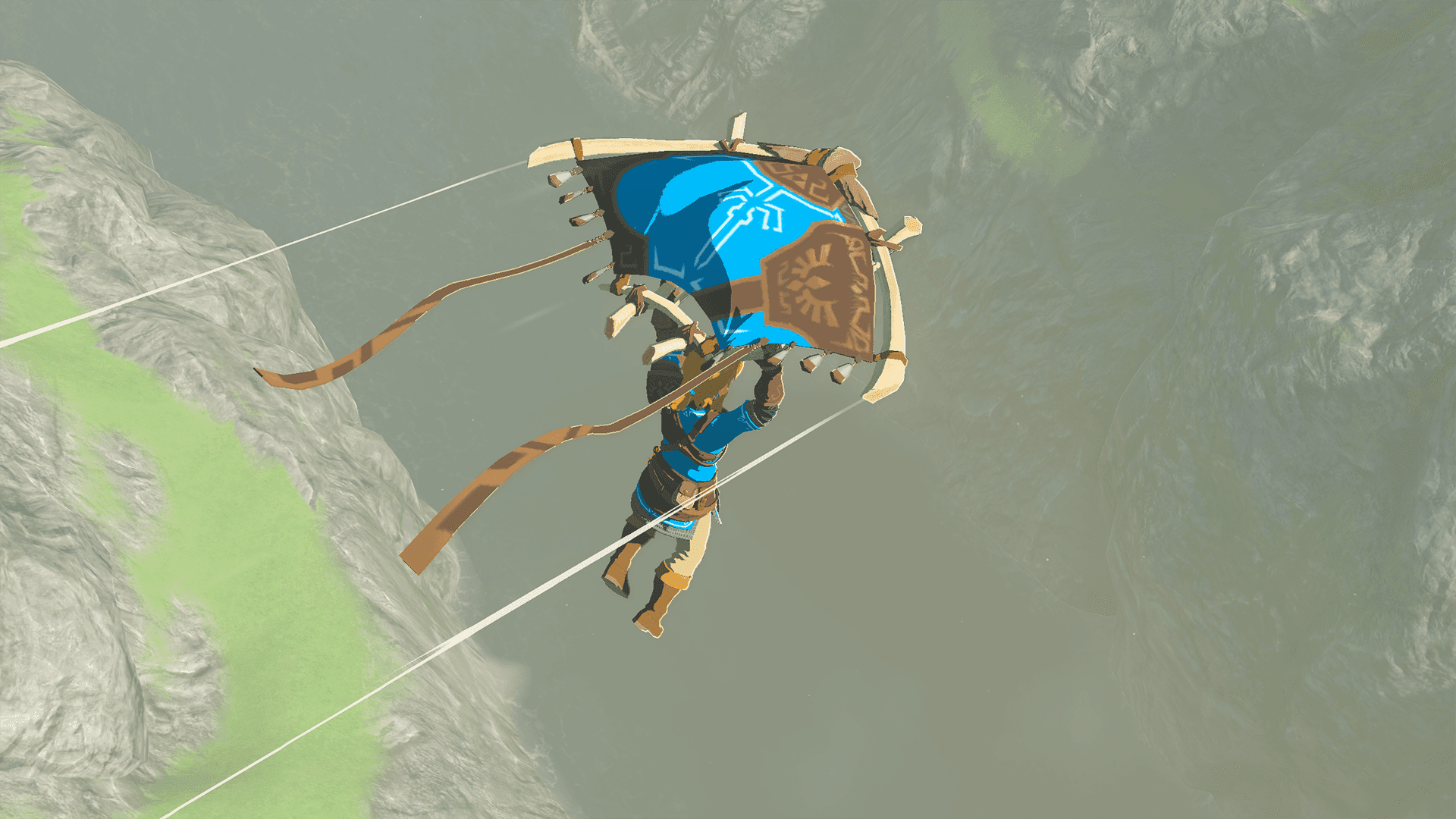
The Legend of Zelda: Tears of the Kingdom accomplishes something that should be impossible. It takes the same Hyrule that players spent hundreds of hours exploring in Breath of the Wild and makes it feel entirely new. Not through superficial changes or a new coat of paint, but through a fundamental reimagining of how players interact with the world itself. Nintendo has given Link a set of abilities so powerful and so creatively open-ended that the game becomes less of a traditional adventure and more of an infinite toybox where the only limit is your imagination. It is, without exaggeration, one of the most impressive design achievements in the history of the medium.
The Ultrahand ability is the cornerstone of this transformation. The power to grab, move, and attach virtually any object in the world to any other object opens up possibilities that boggle the mind. Players have built functional cars, flying machines, mechs, bridges, catapults, and contraptions so elaborate they would make an engineering professor weep. But the brilliance of Ultrahand is not that it enables these spectacular creations; it is that it is equally useful for simple, practical solutions. Need to cross a gap? Grab two logs and stick them together. Need to reach a high ledge? Attach a rocket to a platform and ride it skyward. The system is intuitive enough for quick solutions and deep enough for masterful engineering.
Fuse complements Ultrahand by allowing Link to attach materials to weapons and shields, creating hybrid armaments with unique properties. A sword fused with a diamond becomes devastatingly powerful. A shield fused with a rocket launches you skyward. An arrow fused with a Keese eyeball becomes a homing projectile. The system effectively solves the weapon durability criticism from Breath of the Wild by making every material in the world a potential weapon component. Breaking weapons is no longer a frustration but an opportunity to experiment with new combinations, and the sheer variety of possible fusions ensures that combat stays fresh across the entire adventure.
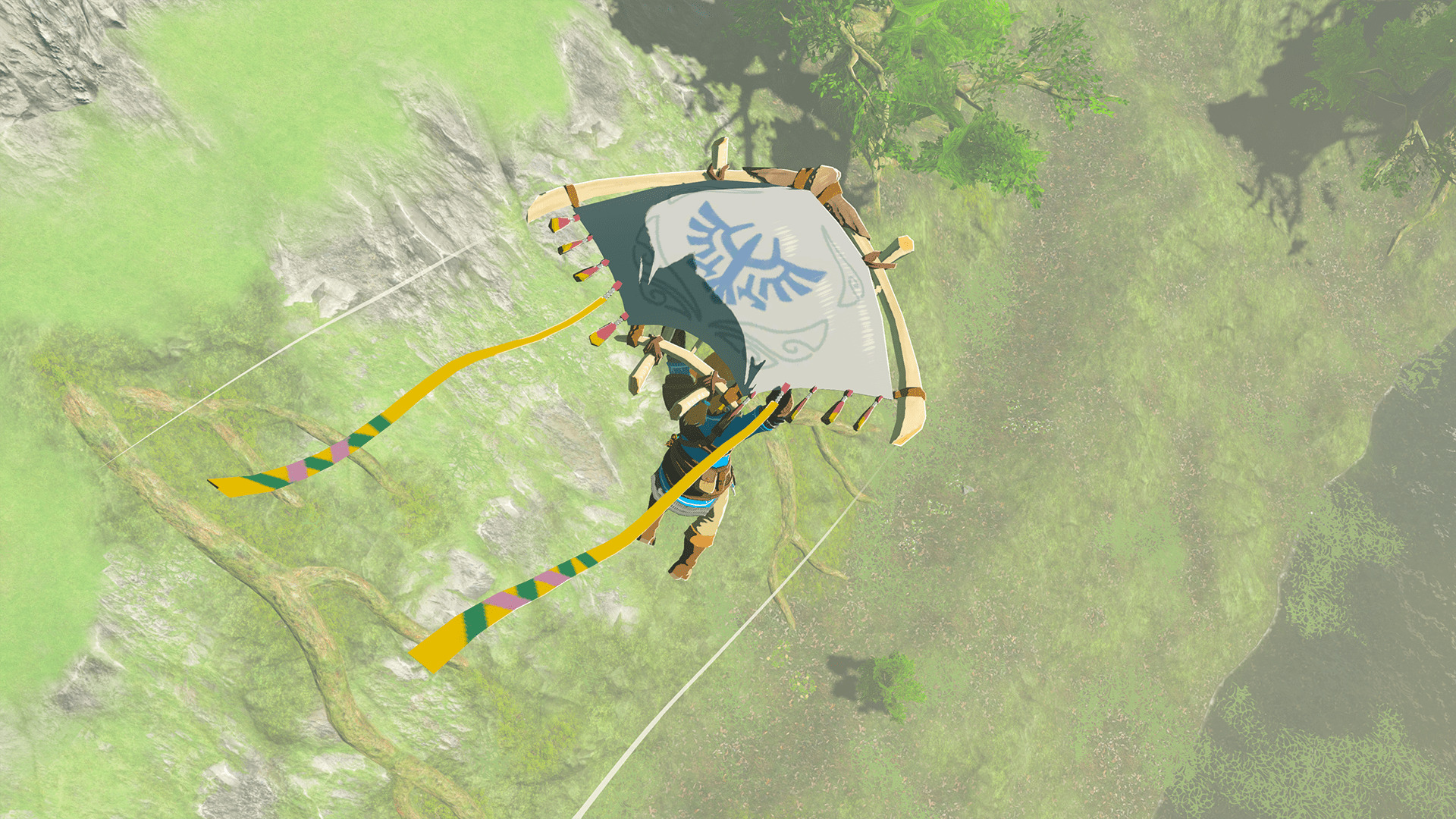
The world itself has been expanded vertically in ways that fundamentally change how you experience Hyrule. The Sky Islands floating above the surface provide a new layer of exploration that is both breathtaking and mechanically satisfying. Launching yourself from island to island, discovering ancient Zonai ruins, and diving from the heavens back to the surface below creates a sense of scale and freedom that few games have matched. Below the surface, the Depths add an enormous underground layer that is dark, dangerous, and deeply rewarding to explore. These three interconnected layers mean that the map, already vast in Breath of the Wild, has effectively tripled in explorable space.
The shrine and dungeon design represents a significant improvement over Breath of the Wild. While the shrines retain their bite-sized puzzle format, the puzzles themselves are more creative and varied, often requiring inventive use of Link's new abilities. The larger dungeons, themed around different environments and tied to memorable sage companions, feel closer to traditional Zelda design while still embracing the open-ended philosophy. Each dungeon boss is unique and challenging, with mechanics that test your understanding of the game's systems in satisfying ways. The puzzle design throughout is simply outstanding, consistently finding new ways to challenge your assumptions about what is possible.
The narrative has been meaningfully improved over its predecessor. The Dragon's Tears questline, which reveals the story of Princess Zelda's journey through Hyrule's ancient past, is emotionally engaging in a way that Breath of the Wild's memories never quite achieved. Zelda herself is given genuine agency and makes a sacrifice that carries real emotional weight. The sage companions each have distinct personalities and backstories that add warmth to the adventure. While the story still takes a backseat to exploration and player-driven moments, it provides a stronger emotional throughline that gives purpose to your journey across the three layers of Hyrule.
The physics engine deserves recognition as a technical marvel that makes everything possible. Objects have weight, momentum, and material properties that interact in consistent and predictable ways. Fire spreads realistically, wind affects gliders and sails, electricity conducts through metal and water, and gravity pulls everything toward the ground with satisfying certainty. This consistency is what makes the creative systems work so well; you can predict how a contraption will behave because the physics are reliable, which means your experiments feel fair even when they fail spectacularly. The engine is the unsung hero of the entire experience.

The Switch hardware does show its age. Complex builds with many moving parts can cause noticeable frame drops, and the resolution in handheld mode can become quite soft during demanding sequences. Dense areas with many enemies and environmental effects occasionally chug in ways that momentarily break immersion. These are understandable limitations given the ambition of the game and the constraints of the hardware, but they are worth noting for players who are sensitive to performance issues. That Tears of the Kingdom runs on the Switch at all is a testament to Nintendo's optimization prowess, even if it cannot always maintain a perfectly smooth experience.
The Legend of Zelda: Tears of the Kingdom is not just a sequel to one of the most celebrated games ever made; it is an evolution that surpasses its predecessor in nearly every meaningful way. It trusts players with tools of extraordinary power and then builds a world that rewards every creative impulse. It is a game where sharing solutions and inventions with other players becomes as much a part of the experience as playing it yourself. Nintendo has created something that will be studied by game designers for decades, a masterwork of systems design, world building, and player empowerment that stands as one of the finest games ever created.