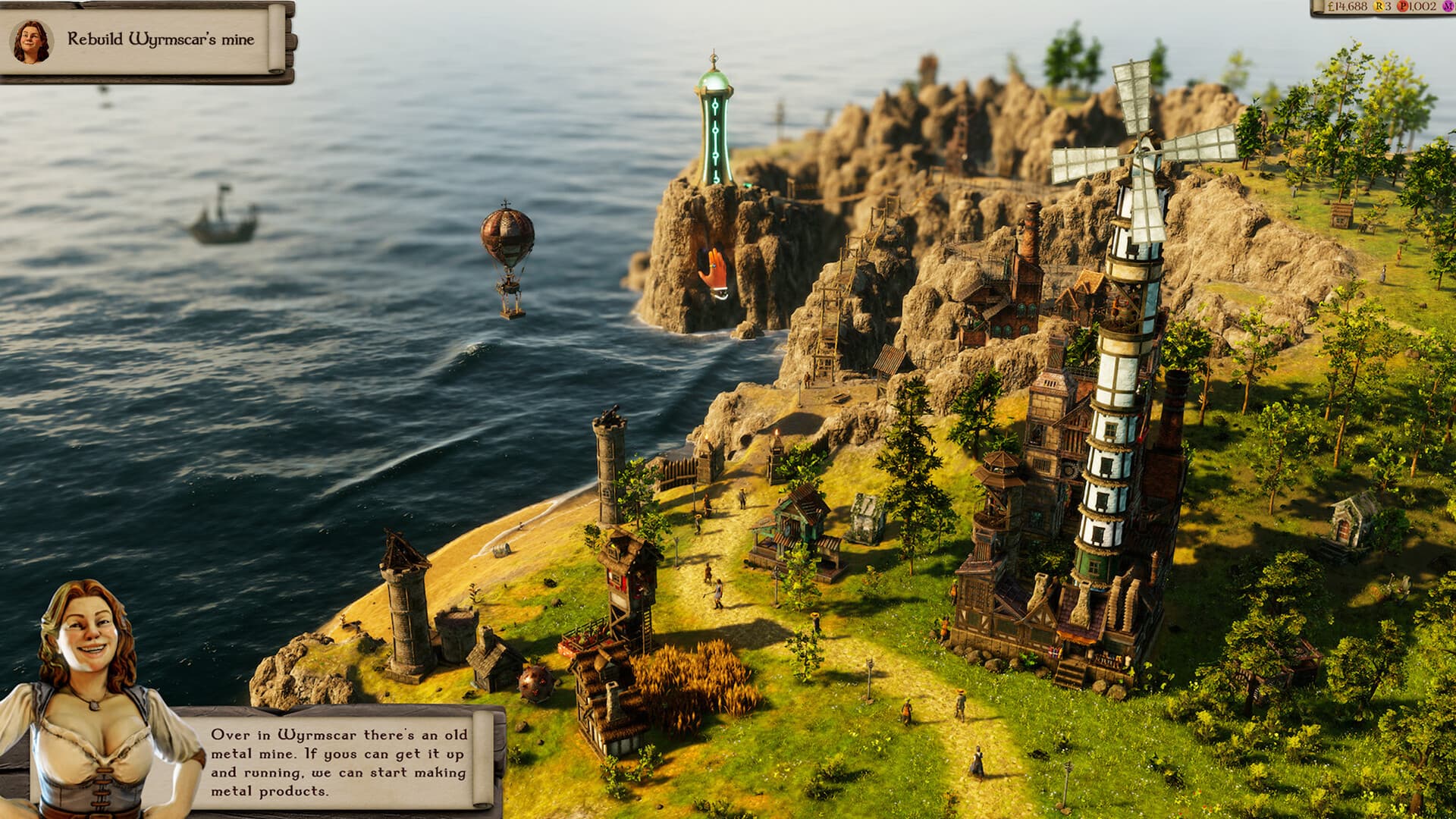
Peter Molyneux is back, and after a decade of big swings and bigger misses, this one actually looks like it lands. Masters of Albion, the latest from his studio 22cans, hits Steam Early Access today — a giant-floating-hand god game that openly wears its Fable, Populous, Black & White, and Dungeon Keeper DNA on its sleeve. Based on the launch-day impressions rolling in, it may be the return to form fans have been waiting fifteen years for.
The game unlocked at 1:00 PM EDT / 6:00 PM BST on Wednesday, April 22, priced at $24.99 with a 10% early-adopter discount for the first seven days. Players who buy and play during that opening week also receive the exclusive Founders Paint Pack — a set of premium in-game colors that won't be available once the window closes. If that sounds like classic Molyneux pageantry, well, yes. But the trailer is speaking for itself.
Build by Day, Defend by Night
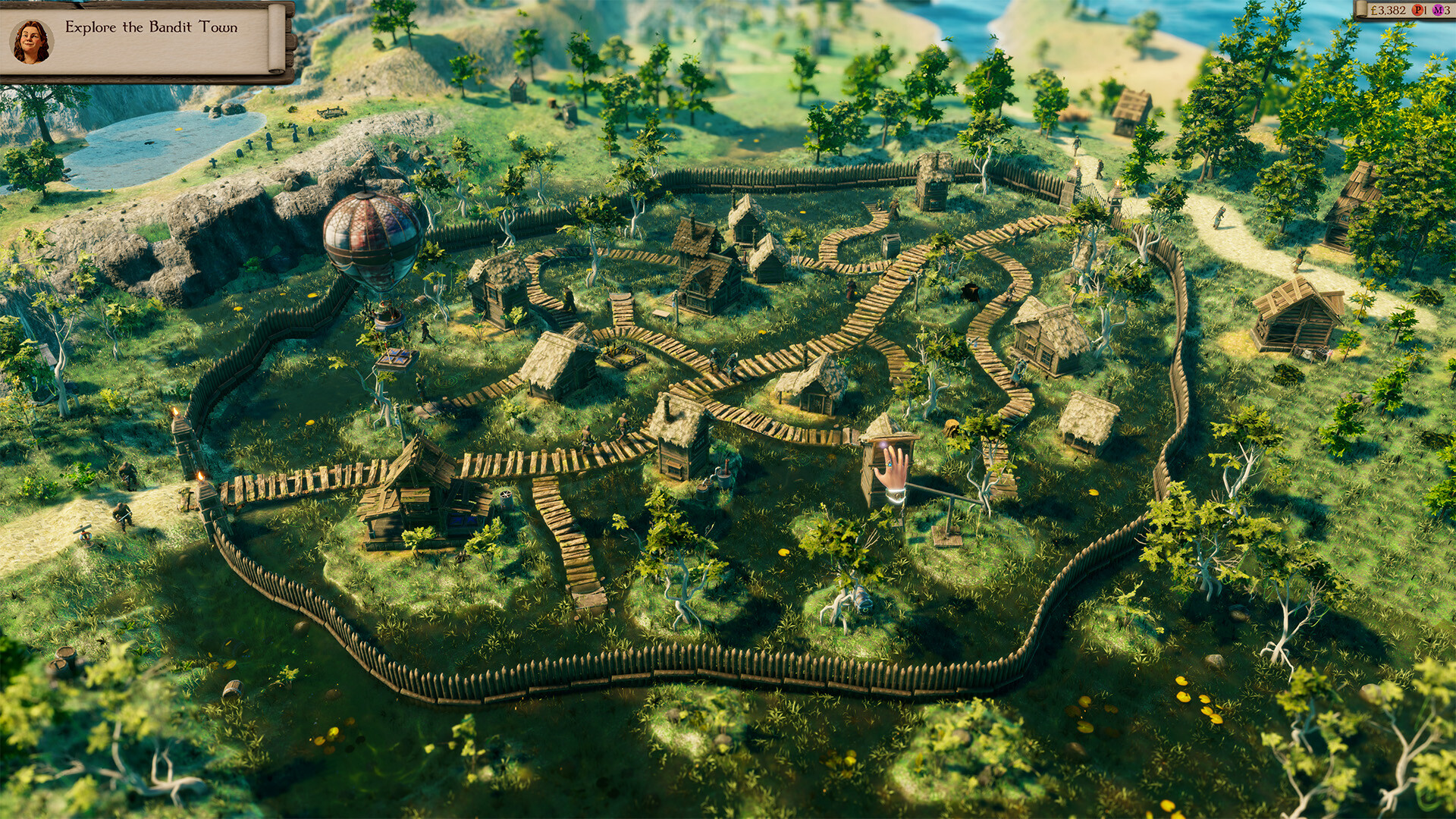
The hook is simple enough that you can pitch it in a sentence. By day, Masters of Albion is a chilled-out town builder where a giant floating hand shapes villages and guides their inhabitants. By night, it transforms into a real-time defense game where you possess heroes and beasts to fend off waves of zombie attackers. Two genres, one village, one continuous save — and crucially, no load screens between the two.
The daytime phase is where the Fable and Black & White blood shows through most vividly. There are no construction timers. You plop a building down and it exists. Villagers wander toward their new home, start doing villager things, and you zoom out to think about the rest of your settlement. The tone is warm, the music is strings-and-woodwinds, and the camera swings around like a director's crane arm. It feels like a video game that was designed to be pleasant.
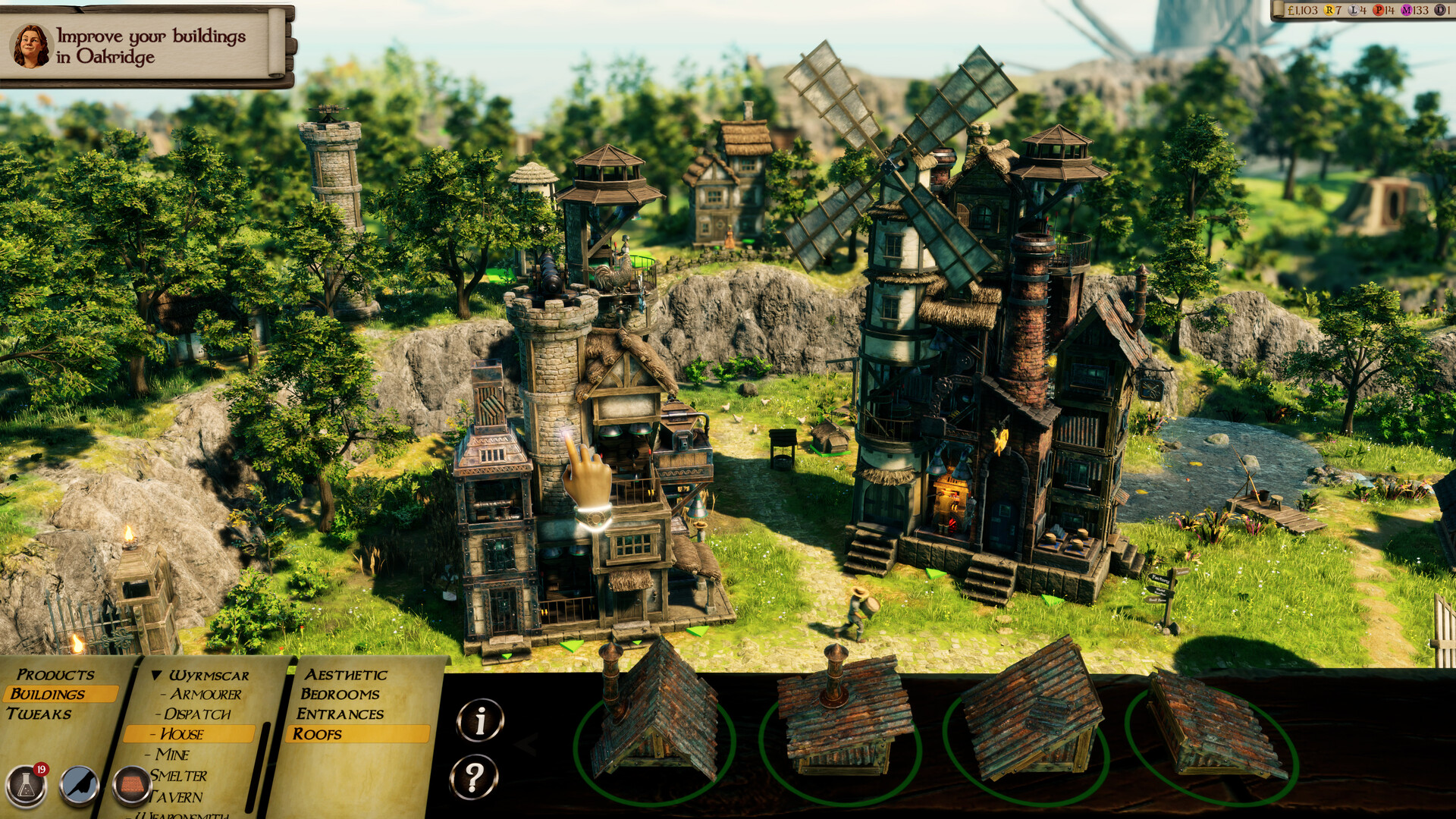
Every structure feeds into a production chain. Grow wheat, turn it into bread, feed it to the village. Pull iron from the mines, smelt it, forge it into swords for the blacksmith, hand those swords to the militia. So far, standard builder stuff. Where things get weird is the factory system, which lets you creatively substitute almost any input for almost any output. Molyneux demonstrated this at a recent preview by swapping chainmail links for literal chains of pork sausage — an experiment that produced functional armor and a very confused housing inspector, who is apparently an actual character in the game and does not like that sort of thing.
The Housing Inspector and Other Surprises
That is very Molyneux. Masters of Albion has the comedic fingerprints of the early Bullfrog and Lionhead catalogs, where the simulation could be taken seriously but the game also knew it was a game. Build slums and the housing inspector will show up with a clipboard. Pack too many people into a single building and complaints start rolling in. Make a particularly ugly town and visitors will remark on it. These small sim-style flourishes are exactly the kind of thing that went missing from the genre during its long hibernation.
There is a morality system, too, imported wholesale from Fable 2 and 3. Choices you make in side quests nudge your alignment either toward saintly benevolence or cartoonish evil, and those choices reshape parts of the world. Side quests are handed out on silver scrolls. The main campaign is dispensed on gold scrolls. You can ignore the main story for dozens of hours if you just want to build a weird pork-armor empire, and the game will happily let you.
When the Sun Goes Down
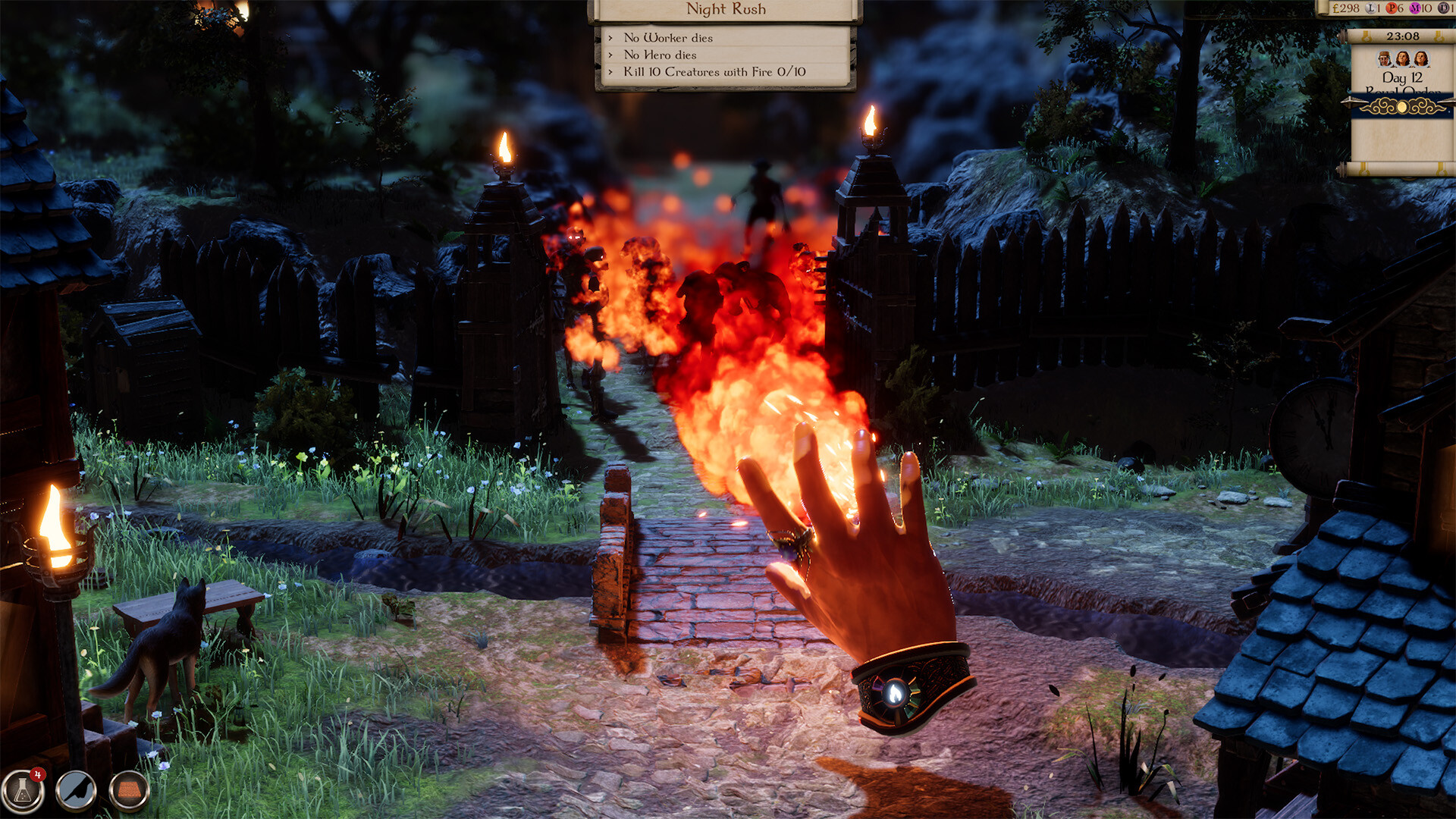
Then night falls. The lighting shifts, the music tightens, and the zombies start lumbering out of the tree line. The nighttime phase moves between third-person action and top-down tactics on the fly. You can possess a hero you've trained, take direct control of their sword or bow, and hack through undead waves yourself. Or you can switch to a god-like overhead view and call down powers — lightning strikes, rock falls, healing rain. Or you can possess an animal. A bear is apparently a very good thing to possess.
The defenses you build during the day — walls, traps, watchtowers, the number of trained militia you've equipped — directly determine how hard the night is to survive. This is the entire load-bearing hook of the design: your building choices have stakes. Put the blacksmith on the wrong side of town and your night-time heroes can't rearm fast enough. Build too much farmland and not enough barracks and you'll run out of swords to hand out. It is the sort of systemic tension that made Dungeon Keeper great, translated to a sunlit pastoral surface.
Peter Molyneux Actually Sounds Measured This Time
If there's one thing Masters of Albion has going for it that previous Molyneux projects didn't, it's a curiously humble launch posture. There are no claims about revolutionizing gaming, no promises that this will change your life, no live demos that later turn out to have been smoke. 22cans is using the Early Access label honestly. The game launches today as "Chapter One" of a planned trilogy, with the studio openly stating that they'll be adding content, balancing systems, and responding to player feedback over the coming year.
Early press impressions reflect that tone. PC Gamer's preview called it "tantalising" and described being "intrigued by the whole endeavour." There is a note of cautious optimism in the air, as if the games press has collectively decided to give Peter Molyneux one more shot, and he's responded by actually shipping a game that does roughly what the trailers said it would do.
System Requirements and Road Map
On the technical side, 22cans has aimed for a reasonably accessible PC. The minimum spec is a Core i5-8400 or Ryzen 5 2600 with 8GB of RAM and an RTX 2060 or GTX 1660 Super. Recommended jumps to an RTX 3060 and 16GB of RAM. The install is a slim 20GB, and the studio says Steam Deck compatibility is "awaiting Valve verification" but has been a design target throughout development.
Console versions for PlayStation 5 and Xbox Series X|S are planned, but only after the Early Access period wraps. There is no multiplayer or co-op at launch — a deliberate decision, according to 22cans, to focus on getting the single-player loop right before asking two people to share one giant floating hand. Whether a co-op mode ever arrives appears to depend on how the first months of Early Access go.
The Bigger Picture
What's interesting about Masters of Albion's arrival isn't just that it's a new Peter Molyneux game. It's that the god-game genre has been effectively dormant for a decade, and a release this confident and this lavish may actually re-seed that soil. Planet Coaster and its ilk took the city-builder crown. Spore collapsed under its own weight. Black & White 2 came out in 2005. There hasn't been a mass-appeal, narrative-driven god game in longer than most of today's Steam users have been playing PC games.
Molyneux knows this, of course. He's been trying to rebuild the genre for fifteen years, through Kickstarters and VR experiments and Godus, all of which stumbled in ways that generated more headlines than the games themselves did. Masters of Albion is being pitched — quietly, for once — as a proper attempt. Not a proof of concept. Not an experiment. A real game that you boot up and play.
As of today, you can. Steam Early Access is live. The launch trailer is above. And if nothing else, the idea of a giant floating hand substituting pork for chainmail during a zombie defense campaign is probably the most Peter Molyneux sentence ever written about a video game that actually exists.
Launch Details
- Developer: 22cans
- Designer: Peter Molyneux
- Platform: PC (Steam Early Access)
- Release: April 22, 2026 — 1:00 PM EDT / 6:00 PM BST
- Price: $24.99 USD (10% launch discount for 7 days)
- Launch bonus: Founders Paint Pack for the first week of buyers
- Console plans: PS5 and Xbox Series X|S after Early Access